
CARBON REMOVAL WEEKLY SUMMARY (18 MAY - 24 MAY 2026)-WEEK#21
Links to recent scientific papers, web posts, upcoming events, job opportunities, podcasts, and event recordings, etc. on Carbon Dioxide Removal Technology


THIS WEEK’S TOP CDR HIGHLIGHTS
Top stories to look for in this week’s issue:
EU Carbon Removals Buyers’ Club launched in Brussels to coordinate public-private demand for CDRs.
Microsoft signed a 650,000 CDR credit deal with BioCirc’s Denmark BECCS project, its first major CDR purchase since reports of a buying pause.
Counteract launched “Carbon Curve”, a tool analyzing how carbon sequestration curves and capital intensity affect the profitability and scalability of CDR pathways.
Isometric released a draft protocol for Improved Soil Management for public consultation. Deadline: 11 June 2026
UK’s first certification scheme for biogenic stored carbon launched.
Carbon Business Council research finds corporates support CDR but delay buying due to policy uncertainty.
The Global South Carbon Dioxide Removal Coalition is hiring for the Executive Director.
Lufthansa Group expanded its climate portfolio to 14 high-standard projects, doubling the share of long-term CDR to around 20%. The offtake includes DAC (Deep Sky), industrial biochar (Exomad Green), and regenerative agriculture (Klim) via Senken.
Mati Carbon launched an open-source tool to explore data from its enhanced weathering field trials.
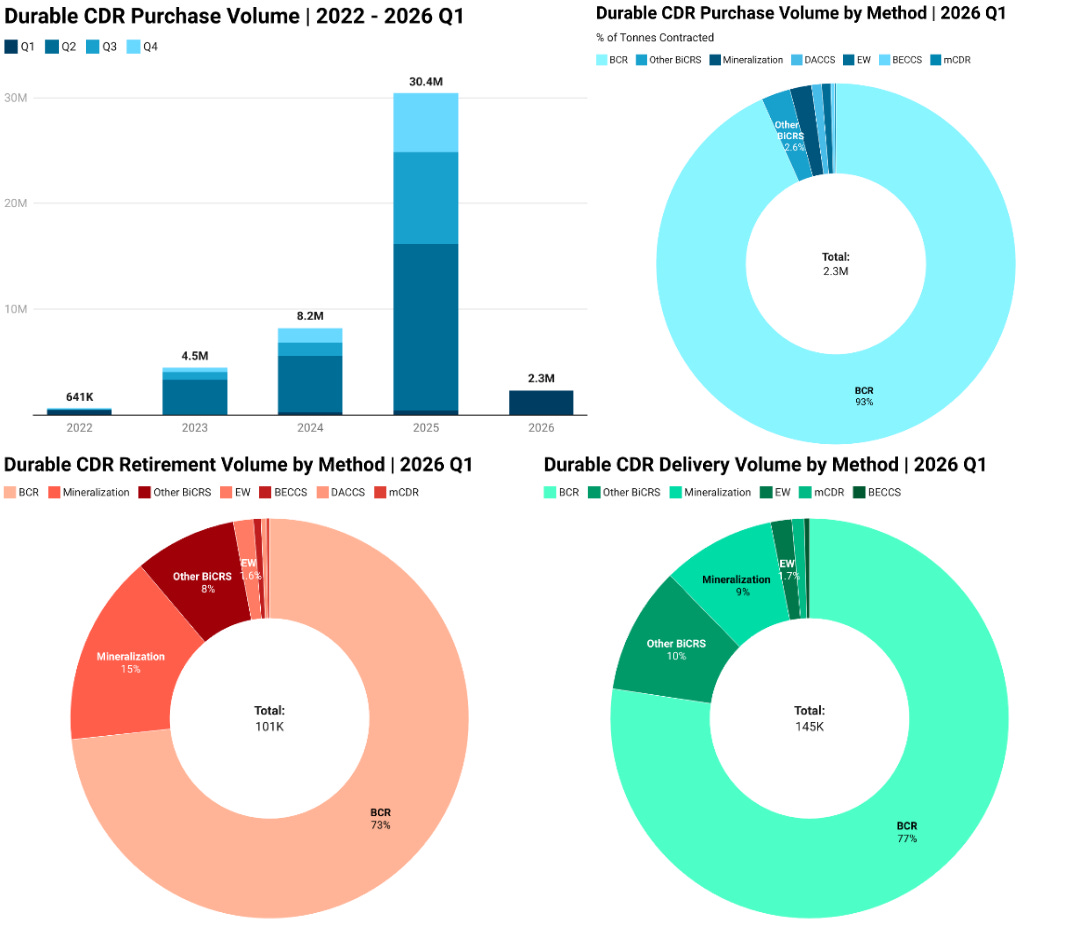
CDR.fyi reported Q1 2026 was a record quarter for CDR, with 2.3Mt CO₂ contracted; biochar led demand and Microsoft remained the top buyer.
Germany launched project to develop carbon removals across three African countries.
The Euro-Mediterranean Center on Climate Change and Politecnico di Milano will host the 4th International CDR Conference in Milan, June 10-12, 2026.
Read on to unpack more updates:
This newsletter is free to read, but not free to produce. Please consider a paid subscription to support our independent reporting.
JUMP TO SECTION
1. This Week’s Top CDR Highlights
2. Commercial News
3. Research Papers
4. Web Posts
5. Reports
6. Upcoming Events
7. Job Opportunities
8. Podcasts
9. YouTube Videos
10. Deadlines
COMMERCIAL NEWS
Denmark’s INNO-CCUS launched a DKK 69m call to fund R&D across CO₂ capture, storage, utilization, and CDR (Funds for NGOs)
Graphyte partnered with Coconino County (Arizona) to turn forest waste into carbon pellets for underground storage (AZ Central)
Supercritical signed an exclusive agreement to distribute 10,000 tonnes of Varaha’s Indian distributed biochar credits certified under Isometric’s module (Supercritical)
Microsoft signed a deal for 650,000 CDR credits from BioCirc’s Denmark BECCS project (BioCrc)
Lufthansa Group expanded its climate portfolio to 14 projects, including a multi-year offtake with Deep Sky, Exomad Green and Klim facilitated by Senken (Lufthansa Group)
Mati Carbon launched an open-source platform to share data from its enhanced weathering field trials (Mati Carbon)
Isometric submitted its application to become an authorized Certification Scheme under EU’s CRCF (Isometric)
Abanos sequestered over 1 million kg of biogenic carbon through sustainable material use (CBN Me)
Truecoco Ghana’s Tikobo One project received an A rating from Sylvera (LinkedIn)
EU Carbon Removals Buyers’ Club launched in Brussels to coordinate public-private demand for carbon removals (Carbon Gap)
Carbon to Sea and Prince Albert II Foundation funded two research projects on ocean alkalinity enhancement impacts on marine life (FPA)
South Korea launched a soil carbon sequestration R&D program focusing on biochar and ERW (Korea Bizwire)
Syngular Solutions and Vallourec signed an MoU to develop BECCS and CCUS projects in Brazil (Gas World)
EFM, Mast Reforestation, and Anew Climate issued verified credits from the Henry Creek Reforestation Project (Carbon Herald)
Germany’s Federal Ministry for the Environment launched an initiative to scale high-integrity CDRs in Africa via IKI and GIZ (Carbon Pulse)
UK launched its first certification scheme for biogenic stored carbon (Forestry Journal)
Counteract launched “Carbon Curve,” a tool analyzing sequestration curves and capital intensity of CDR pathways (Counteract)
RESEARCH PAPERS
Concerns and Questions About Carbon Dioxide Removal Technologies
Authors: Joshua Luczak
Synopsis: This article provides an integrated review of CDR technologies, bringing together technical, scientific, moral, social, and political considerations that are often treated separately in the literature. It highlights key challenges in CDR development and deployment while emphasizing that effective evaluation requires combining physical feasibility with ethical and governance perspectives.
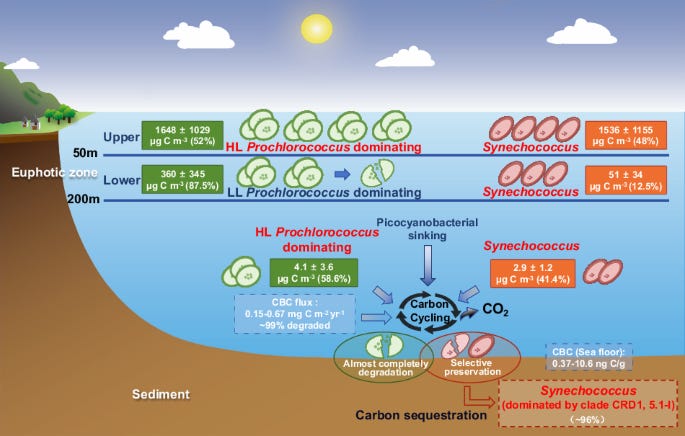
Phytoplankton species determine sediment carbon dioxide removal
Authors: Chen Qiu, Jiandong Zhang, Chunshan Li, Lele Lei, Furun Li, Lijuan Long & Sijun Huang
Synopsis: A new biogeochemical survey revisits the role of marine picocyanobacteria in the ocean’s carbon cycle, focusing on Prochlorococcus and Synechococcus across the South China Sea and Indian Ocean. Using qPCR measurements from water columns and sediment cores, the study finds extremely low abundances in deep waters but substantial presence in surface sediments, with strong lineage-specific differences in export and preservation. While nearly all exported cells are decomposed in surface sediments, the results suggest Prochlorococcus primarily supports nutrient recycling, whereas Synechococcus may contribute more meaningfully to long-term carbon sequestration.
How carbon dioxide removal lost its way: tracing the origin and transformation of the 10-Gt durable CDR target - Preprint
Authors: Rebecca B Neumann
Synopsis: This analysis traces how the widely cited claim that ~10 Gt CO₂ per year of carbon dioxide removal is required by 2050 emerged from IPCC scenario ensembles, where CDR levels are tied to mitigation assumptions rather than fixed temperature targets. It shows that a median-based value was selectively propagated through policy and industry discourse, losing its original conditional context. As a result, CDR is often framed as a prescriptive necessity, with reduced attention to uncertainty, alternative pathways, and the full range of removal approaches, potentially narrowing informed debate on climate strategy.
Three challenges to marine carbon dioxide removal
Authors: Victor Brun, Marine Lecerf, Olivia Le Gouvello, Isabella Reis Costa, et al.
Synopsis: This brief commentary argues that meeting the Paris 1.5 °C target will require both emissions reductions and carbon dioxide removal, including marine-based approaches. It identifies three key barriers to scaling mCDR: significant scientific knowledge gaps, potential ecological and social risks, and insufficient governance frameworks. The authors conclude that, given these uncertainties, mCDR field experiments should remain tightly regulated and focused solely on improving scientific understanding rather than deployment.
Losing out in Land-Based Greenhouse Gas Removal - A critical justice perspective on biochar
Authors: Catherine Price
Synopsis: Drawing on 37 semi-structured interviews with UK-based stakeholders and supporting document analysis, this study examines potential justice implications of scaling biochar as a greenhouse gas removal technology. Using a “multioptic vision” framework, it identifies a range of possible distributive and multispecies injustices linked to biochar production and deployment, while also noting that procedural, recognition, and cosmopolitan justice concerns were not widely raised in the data. The findings suggest that emerging CDR technologies may involve underexplored justice dimensions that are not fully reflected in current stakeholder discourse.
Life cycle greenhouse gas reduction in bioenergy with carbon capture and storage processes for green hydrogen production
Authors: Ha Eun Lee, Jester Lih Jie Ling, See Hoon Lee
Synopsis: This life-cycle assessment examines hydrogen production via bioenergy with carbon capture and storage (BECCS) under grid-connected and self-sufficient configurations. Both systems achieve net-negative emissions, with stronger performance in the self-sufficient setup due to reduced electricity-related impacts. However, results vary across environmental categories, and outcomes are highly sensitive to biogenic carbon assumptions. The study concludes that BECCS hydrogen can deliver negative emissions, but only with clean energy integration and strict biomass management.
Integrated assessment of climate–vegetation trade-offs between carbon sequestration and ozone air quality in China
Authors: Yu Wang, Haomiao Cheng, Tianfang Kang, Jibo Shi & Wentao Han
Synopsis: An integrated modeling study examines how vegetation simultaneously affects carbon sequestration and surface ozone formation through biogenic volatile organic compound emissions. Using coupled land-use, vegetation, and atmospheric chemistry models, it finds that vegetation increases China’s terrestrial carbon sink while also raising ozone concentrations via enhanced BVOC emissions. The results reveal strong spatial heterogeneity, with some regions experiencing trade-offs between carbon gains and air-quality degradation, while others show co-benefits. The study highlights the need for coordinated land-use strategies to balance carbon mitigation and air-quality goals.
Slaking quicklime with seawater for open-ocean alkalinity enhancement: Technical feasibility and cost implications
Authors: Manon Tiphaine Duret, Connor Clark, Kenton Heidel
Synopsis: This study evaluates whether transporting quicklime (CaO) instead of hydrated lime (Ca(OH)₂) could improve the efficiency and cost-effectiveness of OAE via open-ocean liming. Experimental results show that CaO can be effectively slaked using seawater, with similar reactivity to deionized water and limited formation of secondary minerals unlikely to affect alkalinity performance. A transport cost model indicates that onboard slaking of CaO could reduce logistics and handling costs by 4–21% per ton of CO₂ removed. The findings suggest a technically feasible and economically advantageous pathway for scaling OAE deployment.
Direct Air Capture (DAC) Technologies and Subsurface Integration: A Comprehensive Technical Review
Authors: Akshit Agarwal; Yousef Al-Enizi; Cenk Temizel
Synopsis: This review provides a comprehensive overview of DAC technologies, including solid- and liquid-sorbent systems, along with associated energy requirements, sorbent materials, and CO₂ storage options in deep geological formations. It compares technical performance and highlights energy use as the primary cost driver, with current capture costs estimated between $200–600 per ton of CO₂. The paper also examines integration with renewable energy, potential synergies with enhanced oil recovery, and key research gaps such as sorbent durability and long-term storage monitoring.
Forest carbon protocols underestimate climate-driven carbon loss risks
Authors: Chao Wu, Grayson Badgley, Michael L. Goulden, et al.
Synopsis: A large-scale assessment of forest carbon reversal risk in the contiguous United States evaluates how natural disturbances under climate change threaten the permanence of forest-based carbon sinks. Combining forest inventory data, satellite observations, and machine learning, the study finds that rising disturbance risks—especially in California and the Intermountain West—are likely to significantly undermine current carbon storage assumptions. It concludes that existing carbon offset buffer pools are substantially underestimated, potentially by a factor of 2.2 to 8.0, indicating that current accounting frameworks require major revision to remain reliable under future climate conditions.
The efficiency and ocean acidification mitigation potential of ocean alkalinity enhancement on multi-centennial timescales
Authors: Hendrik Grosselindemann, Friedrich A. Burger, and Thomas L. Frölicher
Synopsis: A coupled Earth system model experiment evaluates the long-term effectiveness of OAE under different global warming stabilization pathways. The study finds that sustained alkalinity addition significantly reduces atmospheric CO₂ and provides modest but steady global cooling, with temperature responses largely independent of emission scenarios. While OAE effectively contributes to carbon removal and helps mitigate ocean acidification, its efficiency varies depending on the metric used and declines over time due to carbon cycle feedbacks. The results emphasize that OAE can support climate mitigation but cannot substitute for rapid emissions reductions in meeting Paris Agreement goals.
Interactions between silicate weathering and ectomycorrhiza in severely acidified forests
Authors: Thomas Rombouts, Robrecht Van Der Bauwhede, Matteo Campioli, Håkan Wallander, Judith Sitters & Erik Verbruggen
Synopsis: This study examines how soil acidification from anthropogenic nitrogen deposition disrupts forest ecosystems by reducing the abundance and diversity of ectomycorrhizal (EcM) fungi, which are critical for nutrient uptake, mineral weathering, and soil formation. It evaluates enhanced silicate weathering (ESW) as a slower, potentially more ecologically compatible alternative to conventional liming, emphasizing its interactions with EcM communities. The authors propose a possible positive feedback loop in which ESW supports EcM recovery, which in turn enhances mineral dissolution and nutrient cycling. However, they highlight major uncertainties around microbial-mineral mechanisms, carbon sequestration outcomes, and scalability across ecosystems.
Reversal of the warm Arctic -cold Eurasia intraseasonal coupling by CO2 removal
Authors: M. Inês Cajada, Seok-Woo Son, Ye-Jun Jun, Shih-Yu Simon Wang, Jin-Ho Yoon and Seung-Ki Min
Synopsis: This study investigates whether the weakening of the Warm Arctic–Cold Eurasia (WACE) relationship under greenhouse gas forcing represents an irreversible shift or a reversible response to changing climate conditions. Using a large-ensemble CO₂ ramp-up and ramp-down experiment, the authors find that the WACE coupling weakens as CO₂ increases but largely recovers when concentrations are reduced, indicating reversibility with limited hysteresis during stabilization. These changes are linked to shifts in Eurasian baroclinicity driven by meridional temperature gradients, suggesting that the WACE response reflects a dynamically forced adjustment rather than a permanent change in atmospheric circulation.
Feasible net carbon sink outcomes of China terrestrial ecosystem under economic and ecosystem service constraints
Authors: Boru Su, Moucheng Liu, Tianxiang Hao
Synopsis: This study evaluates the feasibility of enhancing terrestrial carbon sinks in China through ecosystem management (EM) by integrating carbon sequestration potential with economic costs and ecosystem service constraints. It finds that while theoretical carbon sink potential is positive on average, real-world feasibility significantly reduces achievable gains, with some scenarios even showing net negative outcomes under joint constraints. Regional differences in limiting factors—ranging from economic costs to ecosystem service demand—highlight strong spatial variability. The results demonstrate that carbon sink estimates based solely on biophysical potential substantially overstate realistic outcomes, underscoring the importance of feasibility-oriented assessment frameworks.
From Gross to Net: Carbon Dioxide Removal in an Analytic Climate Economy
Authors: Meier F. Quaas, M. Rickels, W. Traeger C.
Synopsis: This study develops an integrated assessment framework to examine the role of CDR under constraints such as limited storage permanence, energy demand, and fossil fuel scarcity. The model shows that introducing CDR does not substantially alter optimal carbon pricing and therefore does not significantly displace emissions reductions. Instead, CDR deployment is primarily constrained by the carbon intensity of energy systems and the availability of low-carbon energy. The results suggest that overshoot pathways may become optimal under certain conditions, with global temperatures peaking earlier when climate damages are high, and highlight the importance of energy system transitions in enabling scalable CDR.
Challenges and opportunities of the full phase-out of fossil fuels under the 1.5 °C goal
Authors: Shotaro Mori, Siddharth Joshi, Volker Krey, Ken Oshiro, Oliver Fricko, Takuya Hara & Shinichiro Fujimori
Synopsis: This study uses two global energy system models to examine pathways for fully phasing out fossil fuels by 2050 in line with COP28 ambitions. It finds that such a transition would require rapid and large-scale electrification, with power generation expanding by 1.6–1.8 times compared to standard cost-effective 1.5 °C scenarios. Achieving this shift would raise cumulative energy investment costs by up to 34% and necessitate accelerated deployment of solar, wind, and electrolysis technologies. While reducing reliance on carbon dioxide removal and improving the likelihood of returning to 1.5 °C after overshoot, the results highlight the substantial structural and financial demands of a full fossil fuel phase-out.
Net CO₂ removal in Korean orchard soils using prunings-derived biochar: effects of pyrolysis type and CH₄ emissions in biochar production stage
Authors: Kyung-Hwa Han, Min-Hyo Lim
Synopsis: This life-cycle assessment evaluates the net carbon dioxide removal potential of a circular biochar system using orchard-pruning residues. Focusing on collection, transport, pyrolysis, and field application stages, the study compares different pyrolysis technologies and methane management strategies. Results indicate that biochar produced at 500°C offers the highest long-term carbon stability, with sequestration potential of 0.66–0.72 t CO₂-eq per ton of dry feedstock. Net removal performance is strongly influenced by moisture content, methane emissions, and system design, with best outcomes achieved through well-dried feedstock and methane-oxidizing pyrolysis systems.
Sustained Neutralization of the Warming Response to Emissions through a Portfolio of GHG Mitigation Strategies - Preprint
Authors: Ella Hughes, Zeke Hausfather, Randall Spock, Christopher Van Arsdale
Synopsis: This paper proposes a time-sensitive accounting framework for net-zero claims that integrates emissions abatement, superpollutant reductions, and carbon dioxide removal across different durability timescales. It argues that current compensation approaches risk overlooking long-term climate impacts by not explicitly tracking how mitigation measures affect temperature over time. To address this, the authors introduce a “sustained warming neutralization” method that translates both emissions and mitigation actions into continuous global mean temperature effects, enabling more consistent evaluation of climate outcomes. The framework is intended to better align corporate mitigation claims with long-term global temperature stabilization goals.
Development of a computable general equilibrium model representing direct air capture and carbon dioxide utilization
Authors: Osamu Nishiura, Shinichiro Fujimori, Ken Oshiro
Synopsis: This study develops a CGE model to evaluate the role of DAC, carbon dioxide storage (DACCS), and synthetic fuel production in achieving a 1.5 °C climate target. Unlike previous IAM approaches, the model explicitly represents DAC-related technologies and their economic interactions. Results suggest that DAC could remove substantial amounts of CO₂ annually while also supplying synthetic fuels, thereby reducing the overall economic burden of emissions mitigation. However, increased reliance on synthetic fuels may raise system costs depending on consumer behavior, highlighting the importance of behavioural and market assumptions in shaping DAC-based mitigation outcomes.
Techno-economic feasibility and life cycle carbon assessment of an integrated bioenergy driven direct air capture for sustainable hydrogen carrier production
Authors: Mahmoud Kiannejad Amiri, Mohammad Moosazadeh, ChangKyoo Yoo
Synopsis: This study presents a Bioenergy-Driven Direct Air Capture (Bio-DAC) system that integrates biomass gasification, liquid-sorbent DAC, and solid-oxide electrolysis to produce carbon-neutral liquid hydrogen carriers. Using process simulation, techno-economic analysis, and life-cycle assessment, the system is shown to capture significant CO₂ while generating high-temperature heat and hydrogen-based chemicals such as formic acid and acetic acid. Results indicate strong economic viability, particularly for formic acid, alongside very low net carbon footprints for both products. However, profitability and environmental performance are sensitive to energy inputs, carbon pricing, and regional conditions, highlighting both the promise and complexity of integrated DAC-based chemical systems.
Olivine-based marine carbon dioxide removal field trial shows no adverse effects on the benthic community - Preprint
Authors: Emilia Jankowska, Matthew Sclafani, M. Grace Andrews, et al.
Synopsis: Field monitoring from a first-of-its-kind marine enhanced rock weathering (mERW) olivine trial evaluates ecological impacts on a New York sandy beach using a BACI design. Abundance and richness recovered within ~2 months; diversity stable; composition shifts likely natural variability. No metal accumulation detected over ~1 year. Overall, no detectable adverse benthic impacts at seasonal scales, though community dynamics show high natural variability.

WEB POSTS
Five burning questions as a newbie to carbon removal (Terraset)
Can enhanced alkalinity store carbon durably? (Science)
Some technologies use accelerated natural processes to capture carbon – but can they store it durably? (The Conversation)
Personal view from a newcomer in CDR about ERW (Carbon Drawdown)
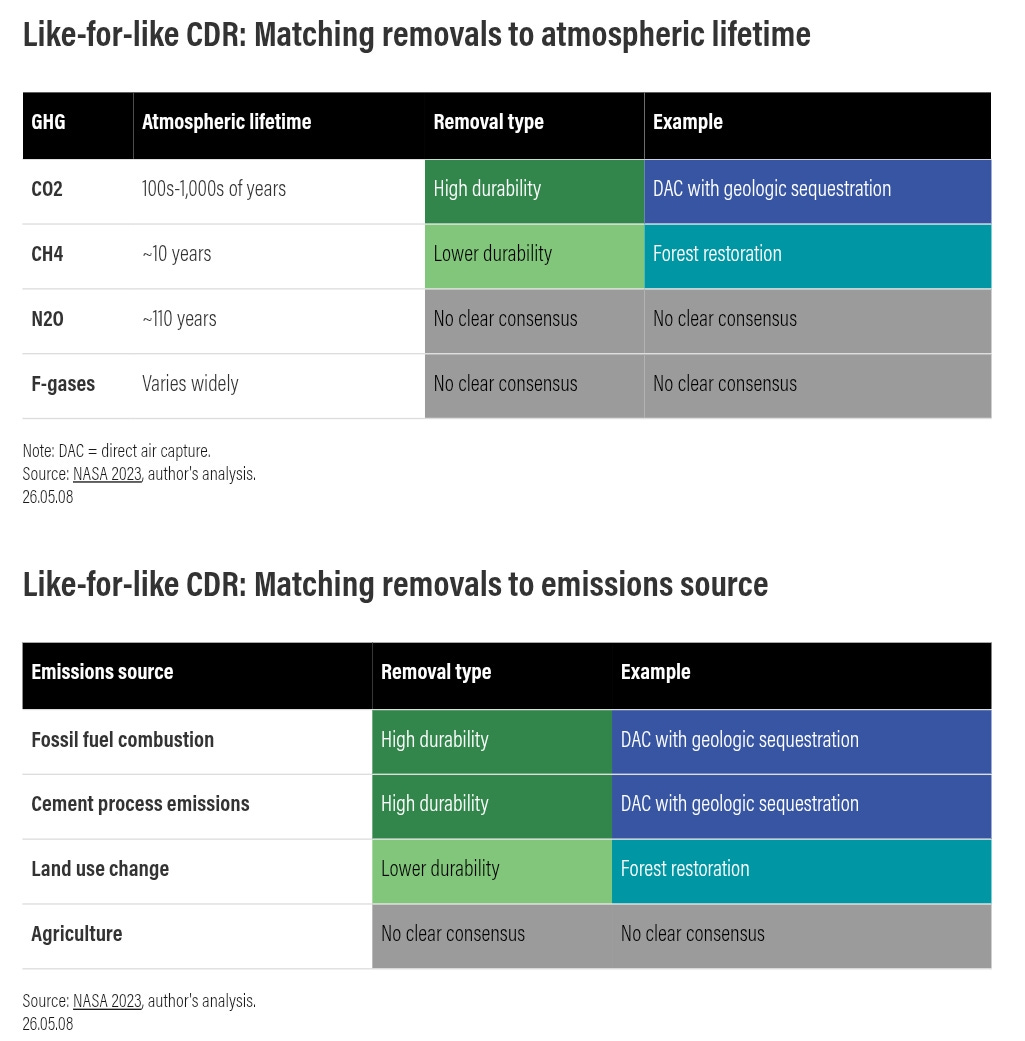
What is the ‘Like-for-Like’ Approach in Carbon Dioxide Removal? (WRI)
EU Carbon Removal Buyers’ Club is set to become a pillar of Europe’s carbon removal market (Carbon Management Europe)
Emerging opportunities in carbon removal demand (LinkedIn)
Time to Act: Carbon Removal Policy in Ireland (LinkedIn)
Climeworks CEO Says Carbon Removal Can’t Hinge on Microsoft (Bloomberg)
Tech risk in CDR underlines need for innovative financing: panel (QC Intel)
Defining residual emissions and why that matters for corporate net zero (LSE)
SBTi Launches Draft Net-Zero Standard To Expand Corporate Climate Action (ESG News)
What the House FY2027 Energy and Water Development budget means for carbon removal (Carbon180)
Biochar in Concrete: A Circular, Climate-Effective Path for Europe’s Construction Sector (Biochar Europe)
REPORTS
Advancing an EU Carbon Removal Buyers’ Club (Carbon Management Europe)
How Governments are Supporting Marine Carbon Dioxide Removal Around the World (World Ocean Council)
Banking Carbon Removal: From Early Deals to Scalable Finance (World Economic Forum)
Corporate Carbon Removal Purchasing Hinges on Policy Clarity (Carbon Business Council)
Advancing an EU Carbon Removal Buyers’ Club (Carbon Management Europe and Carbon Gap)
2026 Q1 Durable CDR Market Update - From Promise to Proof (CDR.fyi)
UPCOMING EVENTS
From an emissions source to a carbon storage solution by ecoLocked | 26 May 2026 | Online
Remote sensing of the land biosphere to support quantification of carbon emissions and removals by the EU projects Avengers, Eye-clima & Paris | 26 May 2026 | Online
From an emissions source to a carbon storage solution by Paebbl | 26 May 2026 | Online
mCDR governance under international legal frameworks by Columbia University | 27 May 2026 | Online
(NEW) The role of BECCS within a future European CDR market by CSink | 27 May 2026 | Stockholm, Sweden
Carbon Removal Readiness Assessments - Poland Launch by Carbon Gap | 29 May 2026 | Online
June 2026
Recognition of Certification Schemes for Permanent Carbon Removals under the CRCF Regulation by European Commission | 01 June 2026 | Online
(NEW) Getting ahead of carbon removal regulation in Europe—implications for your CDR strategy by Climeworks | 01 June 2026 | Online
(NEW) Government Responsibility and Carbon Dioxide Removal by Humboldt-Universität | 02 June 2026 | Berlin, Senatssaal
The State of Carbon Dioxide Removal, Edition 3 - Launch by State of Carbon Dioxide Removal | 02 June 2026 | Online
(NEW) Demystifying Diligence - A Workshop for Carbon Removal Credit Buyers by AirMiners | 03 June 2026
TOCW Flagship Event - Carbon Solutions: Canada’s Competitive Edge by Toronto Climate Week | 03 June 2026
C2V Initiative Year 5 Final Showcase by Urban Future Lab & Greentown Boston | 03 June 2026 | United States
Negative Emissions Summit 2026 | 04 June 2026 | Brussels
CO2 removal from the atmosphere – New opportunities for climate protection and innovation | 08 June 2026 | Berlin
(NEW) 4th International Conference on Carbon Dioxide Removal by CMCC Foundation | 10-12 June 2026 | Politecnico di Milano
Reclaiming Hope, Removing Carbon by University of Bristol | 11-14 June 2026
Carbon Drawdown Symposium 2026 by Carbon Drawdown Initiative | 16–17 June 2026 | Online & Hotel Luise, Erlangen
Carbon Removal London 2026 by Supercritical | 22 June 2026 | London
Scaling CDR Summit by Isometric | 23 June 2026 | London, England
(NEW) Who Holds the Risk in Carbon Removal? Rethinking Durability and Liability by American Forest Foundation | 24 June 2026 | San Francisco
(NEW) Carbon dioxide removal: the latest trends and the UK’s edge by University of Oxford at London Climate Action Week 2026 | 24 June 2026 | United Kingdom
Building the CDR market of tomorrow by AlliedOffsets and LSE | 24 June 2026 | London, UK
Symposium on Biomass-Based Carbon Removal by NET-Fuels | 25 June 2026 | Emilia-Romagna
23rd International Conference on Carbon Dioxide Utilization | 6-10 July 2026 | St.Louis, Missouri
(NEW) Fourth Annual Enhanced Rock Weathering Conference by University of Guelph | 08-10 July 2026 | Guelph, Ontario, Canada
Nordic Climate Finance Summit | 3-4 September 2026 | Oslo, Norway
Carbon Removal Policy Summit by Carbon Gap | 16 September 2026 | Brussels
CDR26–CDRANet’s 2026 conference on the future of carbon dioxide removal | 20-21 October 2026 | Vancouver
2026 North American Biochar Conference - Setting the Standard for Biochar by American Biochar Institute | November 16-18, 2026 | New Orleans, Louisiana
We have curated a “Carbon Removal Events Calendar.” Explore and stay informed about upcoming events, conferences, and webinars on Carbon Dioxide Removal technology. Sync specific events / all events to your default calendar to ensure you never miss out on important CDR updates.
Add our Carbon Removal Events Calendar to your default calendar in 2 ways:
Head to this link: https://teamup.com/kshqbfhrqkw36sxymd
Sync specific event: Click the event → menu (≡) → Share → choose your calendar → Save.
Or sync all events: Menu (≡) → Preferences → iCalendar Feeds → Copy URL → Add to your calendar settings → Subscribe.

JOB OPPORTUNITIES
Senior Manager / Director, Communications at Carbon Removal Data | Remote, Canada
“Carbon Removal Canada is an independent non-profit accelerating the responsible scale-up of carbon removal technologies.”
Executive Director – The Global South CDR Coalition at The Global South Carbon Dioxide Removal Coalition | Brussels-based, Part-time
“The European Union has just set a 90% emissions reduction target for 2040 and crucially, left the door open to high-quality international carbon removal credits. For the Global South, which has already delivered 45% of all durable carbon removal globally, this is a defining moment. The question is whether that potential translates into recognised, regulated market access, or gets locked out of the frameworks that will shape climate finance for decades. The Global South CDR Coalition exists to make sure it doesn’t get locked out. Founded in January 2025 and based in Brussels, we are a non-profit business association representing leading CDR credit producers across Latin America, Africa, and Asia, spanning biochar, enhanced rock weathering, and direct air capture. Our mission is to secure the inclusion of high-integrity, Global South carbon removal in European regulated markets and policy frameworks.”
Associate at Milkywire | Stockholm, Hybrid
“Milkywire is an impact firm, delivering market leading solutions within areas such as permanent carbon removal, nature protection and regenerative agriculture.”
Sr. Manufacturing & Commissioning Engineer at Charm Industrial | Fort Lupton, CO
“Charm Industrial’s mission is to return the atmosphere to 280 ppm CO₂. We convert excess inedible biomass into carbon-rich bio-oil and inject it into underground storage for permanent carbon removal.”
Internship - Carbon Portfolio Officer at Removall Carbon | Paris
“Removall is a company specializing in the development and financing of certified carbon projects. We support businesses and organizations in implementing ambitious and rigorous carbon contribution strategies.”
R&D Scientist – Nanomaterial Integration at Atoco
“Atoco, Inc. is a startup company founded by the distinguished scientist Prof. Omar Yaghi, the inventor of MOF and COF chemistry. Atoco is currently working on technologies in the fields of atmospheric water harvesting and CO2 capture.”
Data Scientist 1 at Mati Carbon
“At Mati Carbon, we are building data-driven systems at the intersection of climate science, agriculture, and machine learning. Our work focuses on solving real-world problems in sustainable agriculture using geospatial intelligence, statistical modeling, and scalable data systems.”
Sr. Business Systems Manager (Data and Automation) at Arbor | El Segundo, CA
“At Arbor Energy & Resources Corporation (”Arbor Energy”), we’re creating technology to power our lives while protecting the planet that sustains them. Our advanced power systems deliver clean, reliable baseload electricity with zero operating emissions—modular, fuel-flexible, and engineered for the realities of today’s energy demand. At the core is a supercritical CO₂ turbine with integrated carbon capture, designed to bring carbon-neutral power online quickly at meaningful scale. “
Operations Associate at Patch | San Francisco
“The way the world accounts for, trades, and acts on environmental impact is being rebuilt from the ground up — and Patch is the platform scaling unified climate action at the center of it.”
Climate & Water Initiatives Lead at Crew Carbon | Remote
“CREW is a water technology company providing wastewater treatment facilities with a process intensification solution that improves performance, lowers costs, and permanently removes greenhouse gases.”
Capital Management Associate - Capital Management at 8Rivers | Durham, North Carolina
“8Rivers is developing the sustainable infrastructure of tomorrow by inventing and commercializing large-scale innovations in the race to Net Zero.”
Looking for your dream job in CDR? There are 564 jobs available *right now*: check them all out at:

PODCASTS
What kind of leader does my CDR company need me to be?—w/ Julia Reichelstein, Vaulted Deep | Reversing Climate Change
“What do you do when you’re a venture capitalist who can’t stop talking about carbon removal at every meeting? You quit and start a carbon removal company, obviously. Three days later you meet the person who’s been quietly running one of the largest carbon removal operations nobody’s ever heard of. And then you build a company that just signed a nearly 5 million ton deal with Microsoft. That’s... a lot of tons.
Today’s guest is Julia Reichelstein, the co-founder and CEO of Vaulted Deep. They take contaminated organic waste—the stuff nobody else wants, the sludgy, PFAS-laden, moisture-intensive material that’s going to landfills or getting spread on land—and they pump it thousands of feet underground where it stays forever. They don’t compete for nice clean biomass. They take the actual waste, and they get paid to take it. That’s a business model I can get behind.
I wanted to talk to Julia because her origin story is unusual. She didn’t start with a technology and try to commercialize it. She came from venture capital, from international development in Kenya and Ethiopia, from a place of asking “what actually scales?” And when she found deep well disposal through her now co-founder Omar, she recognized immediately that this was both great waste management and great carbon removal—and that the combination was the thing.
But this episode went somewhere I didn’t expect. We got into intuition and gut decisions, into what it means to lead a company from a spiritual place without losing business rigor, into “front of brain” versus “back of brain” and why Julia’s trail runs keep getting longer the more successful Vaulted gets. I brought up the question of whether CEOs who founded their companies can survive the transition to scaling them, and Julia gave one of the best answers I’ve heard: “What does the company need me to be?” Not “how do I shape the company around my strengths”—the other direction entirely.
We also talked about the mechanics of spinning a company out of an existing one, why there aren’t many venture-backed spinoffs (and why that should have told her something), and what it actually looks like to go from two trucks a week to fifty trucks a day.”
LULUCF, Carbon Farming and the CRCF Review - with Asger Strange Olesen | The CDR Policy Scoop
“In this episode of The CDR Policy Scoop, Sebastian Manhart and Eve Tamme welcome back Asger Strange Olesen, Global Head of Climate and Biodiversity at the International Woodland Company and Independent Member of the EU Carbon Removal Expert Group.
The conversation opens on where the carbon farming side of the CRCF stands relative to the momentum building around permanent removals. Asger explains why carbon credits are the wrong tool for the majority of European farmland that stays in production, and why the CRCF review’s emerging concept of performance certificates may finally offer a workable alternative. One that links supply chain companies’ Scope 3 reporting to what actually happens on the land.
The episode digs into how performance certificates would work in practice: who issues them, who needs them, and how attribution across multiple buyers in the same supply chain gets resolved. Asger is direct about which concepts from the carbon credit world have no place here, and why insisting on them would kill the instrument before it starts.
The discussion also covers the tension between the EU’s bottom-up inventory approach and SBTi’s top-down FLAG methodology, what the Q4 Commission proposal on national targets and flexibilities needs to get right, and why moving the obligation to pay from member states to sectors and companies is the single most important precondition for any of this to work.”
Live from Brussels: Does the EU Buyers’ Club Have What it Takes? | The CDR Policy Scoop
“Recorded on the ground at the first annual CRCF Days in Brussels, Eve Tamme and Sebastian Manhart spent the day inside Day One on permanent carbon removals and caught up throughout the day to give you a front-row view of how it unfolded.
The episode follows the arc of the day to tackle the central question: does the EU Buyers’ Club have the momentum, the money, and the buyers to actually deliver? Eve and Sebastian arrive with different expectations and leave with a revealing disagreement. Surprisingly, Eve is more bullish than usual and Sebastian is more measured. However both agree the room had real energy with over 200 in person and 300 online, and that the process of getting buyers together under Commission convening is worth something in itself.
The momentum in the room was real but whether it translates into offtake agreements, new buyers, and genuine scale is a different question. Eve and Sebastian get into what was actually announced, which technologies are in or out of scope, and why use cases for permanent removals keep coming up and keep going unanswered.”
YOUTUBE VIDEOS
“Negative emissions” included in emissions scenarios, massive CDR needed to reach climate goals | Climate Chat
“Climate Chat conversation with Detlef van Vuuren about new emission scenarios to be used for CMIP7 climate models.”
Durable CDR Market Update Carbon Unbound East Coast May 19 2026 | CDRfyi
“In this Durable CDR Market Update, Alex Rink, Co-founder and CEO of CDR.fyi, presents the latest data and insights on the durable carbon removal market at Carbon Unbound East Coast in New York on May 19, 2026.”
The 2026 Carbon Removal Challenge Winners Showcase | OpenAir
“For the eighth and final webinar in the OpenAir Collective’s 2026 Carbon Removal Challenge monthly webinar series, the winning student teams of this year’s Challenge presented at the Carbon Unbound East Coast Conference in New York City on May 20th. This is a broadcast the recording of their presentations.”
CSEi Seminar Featuring Liam Bullock (Geological and Mining Institute of Spain) | UChicago Climate Systems Engineering initiative
“Title: Enhanced weathering in industrial, rural and urban settings for atmospheric CO2 removal
This talk explores how enhanced weathering of silicate rocks can be deployed across industrial, rural, and urban settings to remove carbon dioxide from the atmosphere at meaningful scale.”
Is It Too Late? Geoengineering, Sea Level Rise & the Future of Our Planet | Business Talk
“In this episode of Business Talk, we welcome Dr. John Colin Mutter, Professor at Columbia University with dual appointments in the Department of Earth and Environmental Sciences and the School of International and Public Affairs (SIPA), to explore the core ideas from his acclaimed book, Climate Change Science: A Primer for Sustainable Development. Written to bridge the gap between climate science and policy, the book presents the “essential canon” of climate knowledge that non-scientists, students, and policymakers need to understand before entering debates on climate action.
In this conversation, Dr. Mutter unpacks the science behind sea level rise and its uneven regional impact, explains why future hurricanes may be fewer but far more intense, and distinguishes between scientific uncertainty and the greater challenge of predicting human behavior around energy transitions. He also introduces two critical additions in the second edition, attribution science, which uses statistical methods to assess how much climate change influences specific extreme weather events, and a new chapter on geoengineering approaches such as Solar Radiation Management and Direct Air Capture, each carrying vastly different risk profiles.”
Webinar - M ICR017 Integrated Direct Air Capture and Microalgae Carbon Removal Methodology | International Carbon Registry
The New Calculus for Climate Economy: Menggali Potensi Indonesia dalam Carbon Removal | kumparan
“Decarbonization and industrial growth have long been considered incompatible. However, a new approach to global climate economics now offers developing countries the opportunity to prove otherwise. Indonesia, with its rich natural resources and innovation ecosystem, is strategically positioned to lead this change. The MIT Kuo Sharper Center held the second session of the Indonesia Series 2026, bringing together leaders from the worlds of policy, academia, and entrepreneurship to formulate concrete steps for Indonesia to lead global carbon removal without sacrificing industrial competitiveness.”
Financing Carbon Removal From Contracts to Delivery: The Next Trillion-Dollar Market | InPlanet - Measurable. Scalable. Certified Credits
“Carbon removal is no longer constrained by demand, it’s constrained by liquidity and delivery certainty.
During this private lunch hosted by InPlanet and CUR8, buyers, investors, suppliers, and finance leaders came together for an in-depth discussion on one of the biggest challenges in the carbon removal market today:
How do we ensure signed carbon removal contracts actually turn into delivered tonnes?”
Inside One of the Biggest Carbon Removal Projects of the Year | Mast Reforestation
“In 2025, we completed a massive carbon removal project and buried more than ten million pounds of trees in Montana. Burned trees were precisely measured, compacted, and buried in engineered chambers to lock carbon underground for more than a century, instead of letting it float into the atmosphere. This process helps to reduce emissions, prevent future fires, and restore forests faster.”
Jos Cozijnsen - The EU ETS Is Here to Stay: The MSR Debate, Price Controls, and the 2040 | Climate Economics with Arvid Viaene
“The EU ETS is up for review again in 2026, but the debate is noisy: volatile permit prices, politically sensitive energy costs, and lots of claims about whether the system is being “weakened” or “strengthened.”
If you listened to the two-part EU ETS primer with Professor Edwin Woerdman, this episode is the real-time application: what’s actually happening inside EU climate policy right now.
My guest is Jos Cozijnsen, a Dutch lawyer and long-time expert on carbon markets and international climate policy. He has worked on emissions trading since the 1990s, including the Kyoto era, and remains closely involved in today’s debates on ETS design, Article 6, and carbon markets.”
Demystifying Diligence - A Workshop for Carbon Removal Credit Buyers | Tito - AirMiners
Playlist - Annual Convening 2026 | Carbon to Sea

Weekly Carbon Removal Updates from 18 May - 24 May 2026 | Carbon Removal Updates Bulletin
DEADLINES
Deloitte launched an EU survey to design a carbon farming Buyers’ Club under CRCF | Deadline: 26 May 2026
Frontier & Carbon Removal Canada launched a surficial mineralization hub in Quebec | Applications for pilot and research projects are now open, with pre-applications due by 26 May 2026
Carbon Removall launched its 2026 RFP for carbon removal projects | Deadline: 29 May 2026
SICTOM PEZENAS-AGDE in southern France issued a €13.7M biochar facility tender | Submission deadline: 29 May 2026
The UpLink–World Economic Forum Innovation Challenge is open for CDR startups | Applications close 4 June 2026
California Air Resources Board is seeking feedback through June 5, 2026, on draft regulatory concepts for the CCUDS and CDR
Verra opened consultation on improved forest sequestration methodology | Deadline: May 6-8 June 2026
The Clean Energy Ministerial CCUS Initiative and Mission Innovation CDR launched Carbon Management Project Awards for CCUS and CDR projects | Submission deadline: 07 June 2026
The European Commission has opened a consultation on draft CBAM rules that would recognise Article 6 credits when calculating the carbon price paid in exporting countries | Deadline: 10 June 2026
(NEW) Isometric released a draft Improved Soil Management protocol for public consultation | Deadline: 11 June 2026
Wren launched its 2026 RFP, offering up to $500K for ARR, blue carbon, and methane reduction projects | Deadline: 30 June 2026
California Energy Commission opened $11M funding for pre-commercial DAC projects | Deadline July 31, 2026
Call for Proposals: Sweden’s Energy Agency launched a $1B BECCS funding round for CO₂ capture from bioenergy | Deadline: 13 August 2026
Swedish Energy Agency opened 15M SEK funding for negative emissions R&D | Deadline: 31 August 2026
Germany launched €5B Carbon Contracts for Difference program to support CCS and CDR | Tender submission deadline: 07 Sep 2026
Carbon Management journal calls for CDR papers | Deadline: 13 November 2026
Call for Manuscripts | Research Topic: Forest Carbon Sinks: Fluxes and Storage Capacity | 31 January 2027
Follow us on:
Twitter | Bluesky | LinkedIn | YouTube | Substack | Podcast 1 | Podcast 2