


JUMP TO SECTION
1. Top Highlight of the Week
2. Commercial News
3. Research Papers
4. Web Posts
5. Reports
6. Upcoming Events
7. Job Opportunities
8. Podcasts
9. YouTube Videos
10. Deadlines
TOP HIGHLIGHT OF THE WEEK
The State of CDR 2026 3rd Edition - Report (The State of Carbon Dioxide Removal)
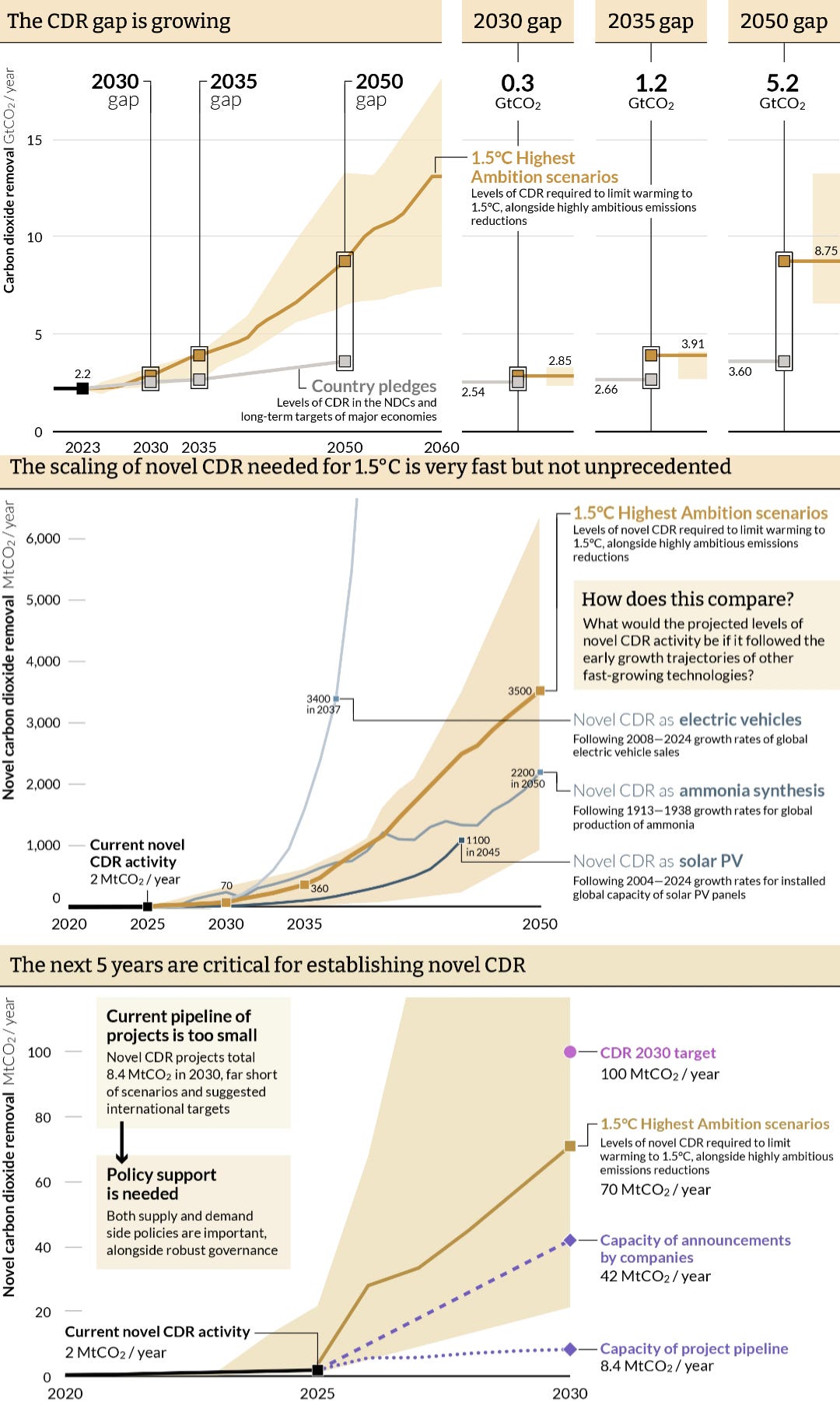
“National pledges fall short of pathways limiting warming to 1.5°C this century by more than 5 billion tonnes of CDR per year by 2050. Closing this gap would require CDR grow at rates comparable to, or faster than, solar power and electric vehicles”, according to the report.
Read on to unpack more updates from past week:
Carbon Removal is one of the most important climate topics of our time.
If you value accessible, independent coverage of CDR research, governance, experiments, and policy developments, consider subscribing to Carbon Removal Updates.
Paid subscriptions directly support keeping this resource public, independent, and growing.
COMMERCIAL NEWS
JPMorgan Chase backed Charm Industrial with $20M venture debt and expanded its purchase agreement to 61,500 tonnes of CDR credits (Axios)
CIEIF awarded $75K grants to CDR firms - Carbizon & Hourglass Climate, and Institute for Glacier Stewardship for environmental impact analysis (CIEIF)
Equilibrium signed a multi-year 180,000-tonne CDR offtake deal with Altitude (Altitude Carbon)
Climeworks Solutions signed a 10-year deal with TD Bank for CDR credits across EW, biochar, BECCS & future DAC (Climeworks)
NYK Group agreed to buy CDR credits from Graphyte’s Carbon Casting technology (NYK)
Skytree announced plans to deploy a DAC system at the site of Dutch energy company Lingezegen Energy, scaling from 900 tCO₂/yr to 7,200 tCO₂/yr by 2027 for greenhouse CO₂ supply (Gasworld)
Neoenergia secured €14.8M financing for large-scale Atlantic Forest restoration in Brazil (ESG News)
TD Bank Group agreed to buy 18,000+ DAC carbon removal credits from Deep Sky over 10 years (Newswire)
Carbon Alpha secured CAD 2.5M from Natural Resources Canada for its North Star BECCS project (QC Intel)
Jain Irrigation launched a large-scale biochar facility in Maharashtra producing 20,000 tonnes annually (Agro Spectrum India)
Puro.earth launched a CRCF program to certify credits under the EU Carbon Removals and Carbon Farming Regulation (Puro.earth)
Nykredit and Klimate partnered to support CDR and storage technologies in Denmark (Bigadan)
Cella and Battelle agreed to explore collaboration on geologic CO₂ storage projects (LinkedIn)
ClimeFi partnered with International Airlines Group and British Airways on its first SAF certificate procurement for a corporate client (LinkedIn)
Octavia Carbon partnered with ZEN Carbon to supply CO₂ captured by its DAC systems for mineralization into concrete (LinkedIn)
Sumitomo Corporation acquired an equity stake in Graphyte’s Loblolly CDR project in Arkansas (Nikkei)
Evero submitted planning application for its flagship InBECCS project within the HyNet industrial cluster (Wood Recyclers)
Isometric certified Version 2.1 of its standard, streamlining validation to accelerate CDR credit issuance (Carbon Pulse)
RESEARCH PAPERS
Rock powder amendment in enhancing plant-mediated carbon sequestration
Authors: Matthew Chekwube Enebe, Richard W. Griffin, Javad Barouei, Ram Ray
Synopsis: Rock powder amendments could play a larger role in carbon removal than previously recognized by improving plant growth while increasing both organic and inorganic carbon storage in soils. This review examines how ERW boosts nutrient availability, strengthens photosynthetic carbon uptake, and promotes long-term carbon sequestration. Despite its potential benefits for climate mitigation, soil fertility, and food security, researchers highlight persistent uncertainties and practical barriers that could limit large-scale deployment.
Analysing policy signals from the US, EU and UN regulations for the deployment of marine carbon dioxide removal
Authors: Coline Seralta, Emma Jagu Schippers, Yannick Perez & Pascal Da Costa
Synopsis: Governance of mCDR is highly fragmented across major jurisdictions, creating uncertainty around its future deployment. A review of regulatory and policy documents from the United States, European Union, and United Nations finds divergent approaches: the US tends to support regulatory pathways that enable research and innovation, the EU provides mixed or ambiguous signals, while UN frameworks generally emphasize restrictions on deployment. The study highlights how scientific uncertainty and political disagreement jointly shape the evolving global governance landscape for ocean-based carbon removal.
Carbon Removal Using Geological Resources and Mine By-Products
Authors: Liam A. Bullock & Juan Alcalde
Synopsis: Geochemical CDR is emerging as a scalable approach that uses natural and industrial alkaline materials to permanently store atmospheric CO₂ as bicarbonate or carbonate minerals. The strategy relies on enhanced weathering of silicate rocks and industrial by-products such as mine tailings and steel slags, with efficiency driven by factors like particle size, climate conditions, and biological activity. While the approach offers potential gigaton-scale removal and co-benefits for resource circularity and soil health, challenges remain around monitoring, net carbon accounting, environmental risks, and regulatory alignment.
Natural forest expansion is a larger carbon sink than secondary forests in moist tropics
Authors: Yihang Zhang, Viola H. A. Heinrich, Clément Bourgoin, et al.
Synopsis: Natural forest expansion into previously unforested land may represent a larger tropical carbon sink than previously recognized. Combining satellite observations with spaceborne LiDAR data, researchers found that naturally expanding forests store slightly more above-ground carbon than secondary forests and show comparable carbon accumulation rates, particularly in the Americas. The study highlights natural forest expansion as an overlooked source of climate mitigation potential, alongside protecting old-growth forests and supporting forest regeneration.
Photosynthetic optimum temperature plays a minor role in the increase of terrestrial carbon uptake from 2000 to 2019
Authors: Chongyang Xu, Hongyan Liu, Dan Yakir, et al.
Synopsis: Rising temperatures are increasing ecosystem carbon uptake, but not for the reasons scientists previously assumed. Analysis of the past two decades shows that while maximum photosynthesis has increased globally, the temperature at which photosynthesis performs best has remained relatively unchanged. Instead, researchers find that changes in water use and vegetation structure play a much larger role, suggesting future carbon storage projections must account more carefully for ecosystem responses to water stress and changing environmental conditions.
Quantification of sequestered fossil-derived CO₂ in cementitious materials and its atmospheric contamination using carbon isotope measurements
Authors: Ippei Maruyama, Ryusei Igami, Ryo Kurihara, et al.
Synopsis: Accurately measuring how much CO₂ cement-based materials capture remains challenging because atmospheric carbon can mix with targeted carbon sources during carbonation. This study combines carbon isotope analysis with accelerated carbonation experiments to distinguish fossil-derived CO₂ from atmospheric contamination in cement paste. Researchers propose a framework for source-specific measurement of CO₂ fixation, potentially improving verification methods and supporting more reliable labeling and assessment of carbon-captured construction materials.
Biochar co-benefits are valued in the voluntary carbon market
Authors: Medilė Jokubė, Matti Hyyrynen, Sampo Pihlainen & Kari Hyytiäinen
Synopsis: Market demand for sustainable development benefits appears to influence pricing in the biochar carbon removal market, according to new analysis of voluntary carbon market transactions through 2024. Researchers found biochar carbon credit prices rise as the number of claimed co-benefits increases, with economic co-benefits associated with higher prices while environmental claims tend to correspond with lower valuations. The findings suggest stronger auditing of co-benefit claims may be necessary to maintain credibility and integrity in emerging carbon removal markets.
Hybrid biophysical systems for atmospheric CO2 capture
Authors: Peter Agbo, Joseph O Varghese, Ryan K Henning, Jacob S Kanady and Ashwin Ram
Synopsis: Harnessing engineered microorganisms could offer a new route to lower-cost carbon removal by accelerating one of the key bottlenecks in CO₂ capture. This perspective explores the use of cyanobacteria engineered to display carbonic anhydrase enzymes on their outer membranes, creating self-refreshing biological catalysts for direct air and ocean capture systems. Researchers suggest such systems could reduce reliance on purified enzymes while potentially improving the scalability of mineralization-based carbon removal approaches.
Bridging carbon removal time lags in agricultural enhanced weathering via methane emission reduction
Authors: Noah J Planavsky, Beck J Woollen, Ella Milliken, Yoshiki Kanzaki, Mojtaba Fakhraee, David J. Beerling and Christopher T Reinhard
Synopsis: Pairing enhanced weathering with methane removal could help address one of carbon removal’s key challenges: delayed climate benefits. This perspective argues that while enhanced weathering offers durable carbon removal and agricultural co-benefits, the lag between deployment and resulting radiative cooling complicates its use for offsetting emissions. Researchers propose coupling enhanced weathering with enhanced methane destruction to create more immediate and continuous climate impacts, potentially improving carbon credit frameworks.
Increased yields for smallholder farmers from enhanced rock weathering
Authors: Jacob S Jordan, Tom M.D. Mills, Isha Jain, Dilip Patidar, et al.
Synopsis: ERW could provide a pathway for increasing crop yields while supporting carbon removal in smallholder farming systems. Analysis of 216 rice farmers across 42 villages in India found median yield increases of 24.7% alongside household income gains exceeding 20%, suggesting productivity improvements without relying solely on synthetic fertilizers. Researchers argue carbon finance could help offset deployment costs, potentially improving the scalability of low-carbon agricultural intensification.
The Importance of Scale in the Future of Mangrove Blue Carbon Under Sea-Level Rise
Authors: A. P. Iwantoro, D. H. Urrego, D. Xie, A. P. Nicholas, et al.
Synopsis: Mangrove forests may become less reliable long-term carbon sinks under rising sea levels despite showing localized increases in carbon accumulation. Using a new eco-carbon-morphodynamic model, researchers found that sea-level rise can reduce landscape-scale carbon storage by limiting mangrove expansion, increasing erosion, and triggering vegetation loss. The findings suggest that local gains in carbon sequestration may mask broader ecosystem vulnerability, highlighting the importance of landscape-scale assessments for future blue carbon projections.
Environmental trade-offs of CO2 mineralization cell by life cycle assessment
Authors: Xinchen Song, Yunpeng Wang, Wenchuan Jiang, Zaijie Wang et al.
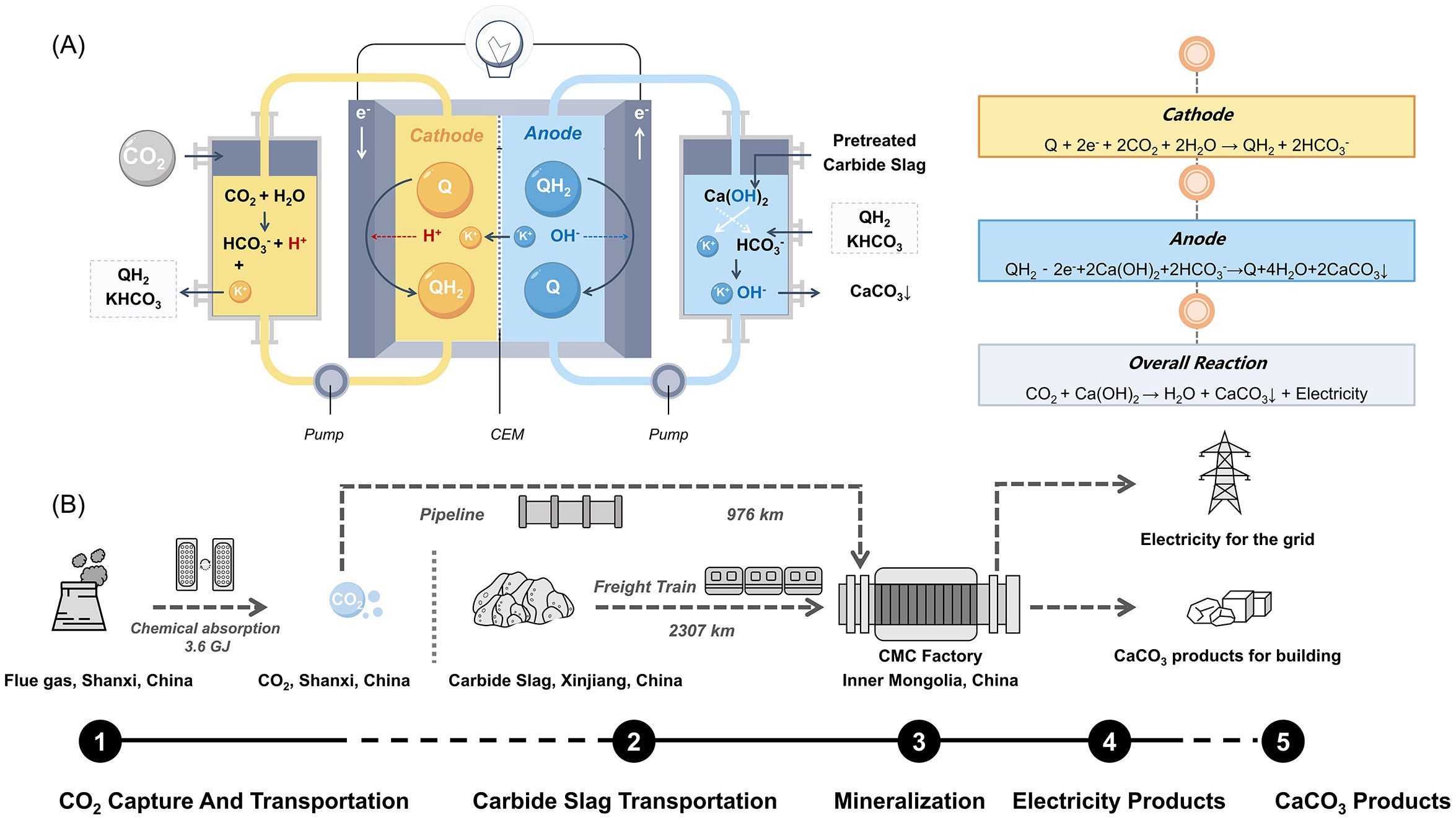
Synopsis: Converting industrial waste into carbon-storing materials could deliver larger climate benefits than previously assumed, according to a new life cycle assessment of CO₂ mineralization cells (CMC). Researchers found mineralizing 1 tonne of CO₂ using carbide slag generated substantial net emissions reductions while producing high-purity calcium carbonate and electricity as co-products. The analysis suggests environmental benefits extend beyond direct carbon storage, with system design, energy sources, and deployment conditions strongly influencing performance.
Evaluation of the Mechanical Performance and Carbon Sequestration in Ferro-Rock Sustainable Concrete Through Partial Cement Replacement and Controlled CO2 Curing
Authors: Seleem S. E. Ahmad, Ahmed M. Elshirbeny, Ahmed A. Elshami, et al.
Synopsis: Ferro-Rock concrete could offer a carbon-negative alternative to conventional cement by using iron-rich waste materials and CO₂ curing to form iron carbonate binding phases. Experimental results show limited cement replacement levels (5–10%) improved compressive, flexural, and tensile strength compared with conventional mixes, while fully cured Ferro-Rock materials sequestered up to 11% CO₂ by weight. Researchers suggest the approach shows promise for lower-carbon construction, although higher replacement levels significantly reduced material performance.
Investigating the Influence of Alkali Chloride Salts and Hydration on the Direct Air Capture Capacity of Polyethylenimine Films with Quartz Crystal Microbalance and Infrared Spectroscopy
Authors: Kayley Winata, Kayli Kuk, Christopher L. Soles, Avery E. Baumann
Synopsis: New research suggests salt additives could improve the performance of DAC materials by controlling how much water and CO₂ they absorb under different humidity conditions. Using aminopolymer sorbents and multiple experimental techniques, researchers found that salts with different cations alter water uptake and influence the formation of CO₂ capture products, ultimately changing capture efficiency. The findings could help optimize sorbent materials for more effective carbon removal systems.
Opposing Carbon Dioxide Removals and emissions reductions confuses mitigation policies - Preprint
Authors: Romain Pirard, Kenneth Möllersten
Synopsis: Separating climate mitigation into carbon removal and emissions reduction categories may create more problems than it solves, according to a new assessment of carbon market methodologies. Researchers argue the distinction is often inconsistent, overlooks key economic considerations, and fails to capture the hybrid nature of many mitigation activities. Instead, the study proposes prioritizing interventions based on characteristics such as permanence, cost, leakage risks, co-benefits, and overall mitigation effectiveness rather than rigid categories.
Experimental Evaluation of Three Clay Minerals for CO2 Mineralisation: New Pathways for Carbon Sequestration
Authors: M. Abdalqadir, S. Rezaei Gomari, and D. Hughes
Synopsis: Abundant clay minerals could represent an overlooked pathway for permanent carbon removal through mineral carbonation. Experimental testing of kaolinite, montmorillonite, and illite found all three materials captured measurable amounts of CO₂, with illite showing the strongest performance due to its higher calcium content and montmorillonite benefiting from favorable surface properties. The findings suggest certain clay-rich materials could expand the range of feedstocks available for mineral carbonation-based carbon sequestration.
Species-specific allometric indicators and carbon sequestration potential in mixed agro-forestry plantation systems - Preprint
Authors: Adikant Pradhan, S. K. Nag, T. Chnadrakar, S. Malaiya, K. S. Keram, D. Kerketta, Amar Nath, Sweekruta Mohapatra
Synopsis: Species selection and planting density play a major role in determining how much carbon agroforestry systems can store, according to new research evaluating five common plantation species. While eucalyptus showed the highest carbon storage per tree, cashew plantations delivered the greatest carbon sequestration per hectare due to higher planting densities. The findings suggest species-specific growth patterns and allometric models could improve carbon accounting and ecosystem monitoring in agroforestry systems.
A comprehensive design framework for nature-based solutions projects focused on carbon dioxide removal: A systematic literature review of approaches, models and tools
Authors: Combe Mathieu, Briard Tristan, Harambat Fabien, Segonds Frédéric, Jean Camille
Synopsis: Designing Nature-based Solutions (NbS) for carbon dioxide removal requires more detailed and structured methodologies than current standards provide. A review of 118 studies identifies a multi-step framework for NbS design, including definition, assessment, optimization, and implementation, with supporting tools such as carbon stock assessments, ecosystem service evaluation, and dynamic carbon modeling. The analysis highlights growing use of machine learning and calls for more systematic, resilient design approaches to improve real-world NbS effectiveness.
Ocean iron fertilization for carbon dioxide removal and climate change mitigation
Authors: Santiago Hernández-León & Eric Lichtfouse
Synopsis: Removing carbon dioxide from the atmosphere may become increasingly necessary alongside emissions reductions, prompting renewed attention toward large-scale carbon removal approaches such as ocean iron fertilization. This perspective argues that natural carbon sinks operate too slowly to counter rising atmospheric CO₂ concentrations and presents ocean iron fertilization as a potentially scalable approach for enhancing carbon storage in the deep ocean. The authors note, however, that such interventions remain controversial due to ecological uncertainties and potential risks.

WEB POSTS
UK Environment Agency supports Drax carbon capture permit approval (gasworld)
Europe lays the foundations for a robust carbon removals and carbon farming market (EU)
Climate Tech In The Age of AI (Alt Carbon)
Stockholm shows the way: How public buyers can boost the carbon removal market (Carbon Gap)
SAT-C: UNDO’s Carbon Removal Measurement Breakthrough (UNDO)
Introducing The Demand Triangle - Growing the market for carbon removal (Carbon180)
F1 racing engineers play a role in soil carbon measurement breakthrough (Carbon Pulse)
Marine CDR needs to overcome regulatory issues to scale: paper (QC Intel)
Carbon dioxide removal might need to scale faster than solar to meet climate targets (PIK)
Beneath the surface, Kingston researchers tackle biggest challenge facing carbon-removal (Whig Standard)
US oil companies could be converted to carbon removal obligation, says academic (Carbon Pulse)
Canadian Cleantech Settles in Alberta to Advance Low-Carbon Cement Solution (Clean Energy)
Carbon Unbound and the Limits of Markets (A Credible Path)
Why distributed biochar needs two methodologies (Rainbow)
Why Bedrock? The Case for Coordinated ERW Research Now (Cascade Climate)
Global Biochar Market in 2025: Explosive Growth from 350,000 Tons to Millions of Tons (Mekong Biochar Initiative)
REPORTS
Scaling Carbon Dioxide Removal in the Ocean - A US Federal Policy Roadmap (Carbon180)
Biochar Carbon Removal Standards: A comparative assessment of the EU CRCF, ICVCM and Article 6.4 (CO2RE)
The State of CDR 3rd Edition (The State of Carbon Dioxide Removal)
Build the world your net zero target assumes - A framework for action over accounting (Milkywire)
Swedish EPA - In-depth analysis – incentives for permanent admissions at EU level (Swedish EPA)
UPCOMING EVENTS
JUNE 2026
A new approach to distributed biochar certification by Isometric | 09 June 2026 | Online
4th International Conference on Carbon Dioxide Removal by CMCC Foundation | 10-12 June 2026 | Politecnico di Milano
How to Fund Ocean Fertilization Research - on Scrubbing the Skies by Institute for Responsible Carbon Removal | 11 June 2026 | Online
Reclaiming Hope, Removing Carbon by University of Bristol | 11-14 June 2026
Geochemical Pathways to Carbon Removal in Mining | 12 July 2026 | Montreal, Canada
Direct air capture: Illuminating and filling the gaps by CanCO2Re Initiative | 16 June 2026 | Online
Carbon Drawdown Symposium 2026 by Carbon Drawdown Initiative | 16–17 June 2026 | Online & Hotel Luise, Erlangen
(NEW) The Storage Conference 2026 - Enabling safe CO2 storage at giga scale | 16-17 June 2026 | Trondheim, Norway
Carbon Expert Series: GHG Protocol update: The Land Sector Removal Standard by Carbon+Alt+Delete | 18 June 2026 | Online
Carbon Removal London 2026 by Supercritical | 22 June 2026 | London
Carbon Removal London 2026 by Supercritical | 22 June 2026 | London
CDR2030: The Action Agenda for Growing Carbon Removal by Chris Neidl & Matt Isaacs | 23 June 2026 | London, United Kingdom
From Farmland to Carbon Markets: Evaluating Enhanced Rock Weathering by Tess Seminar | 23 June 2026 | Smithfield & Online
Scaling CDR Summit by Isometric | 23 June 2026 | London, England
(NEW) Clause & Effect: Making Carbon Removal Purchasing Agreements Work by Beatriz Beccari Barreto, Elena & Glenn Morley | 23 June 2026 | Invited Kingdom
(NEW) London Climate Action Week CDR Social by The Carbon Removal Show | 24 June 2026 | United Kingdom
Who Holds the Risk in Carbon Removal? Rethinking Durability and Liability by American Forest Foundation | 24 June 2026 | San Francisco
Carbon dioxide removal: the latest trends and the UK’s edge by University of Oxford at London Climate Action Week 2026 | 24 June 2026 | United Kingdom
Building the CDR market of tomorrow by AlliedOffsets and LSE | 24 June 2026 | London, UK
(NEW) Carbon Buyers Breakfast at the National Gallery: How CSOs Can Position Carbon Removal as Strategic Value - London Climate Action Week 2026 by InPlanet, Carboneers & ClimeFi | 25 June 2026 | United Kingdom
Symposium on Biomass-Based Carbon Removal by NET-Fuels | 25 June 2026 | Emilia-Romagna
July 2026
23rd International Conference on Carbon Dioxide Utilization | 6-10 July 2026 | St.Louis, Missouri
Fourth Annual Enhanced Rock Weathering Conference by University of Guelph | 08-10 July 2026 | Guelph, Ontario, Canada
Nordic Climate Finance Summit | 3-4 September 2026 | Oslo, Norway
Carbon Removal Policy Summit by Carbon Gap | 16 September 2026 | Brussels
Carbon Unbound Europe 2026 | 20-21 October 2026 | London, United Kingdom
2026 North American Biochar Conference - Setting the Standard for Biochar by American Biochar Institute | November 16-18, 2026 | New Orleans, Louisiana
(NEW) Massachusetts Carbon Dioxide Removal Study Workshop for the Executive Branch by RMI | 17 November 2026 | Online
We have curated a “Carbon Removal Events Calendar.” Explore and stay informed about upcoming events, conferences, and webinars on Carbon Dioxide Removal technology. Sync specific events / all events to your default calendar to ensure you never miss out on important CDR updates.
Add our Carbon Removal Events Calendar to your default calendar in 2 ways:
Head to this link: https://teamup.com/kshqbfhrqkw36sxymd
Sync specific event: Click the event → menu (≡) → Share → choose your calendar → Save.
Or sync all events: Menu (≡) → Preferences → iCalendar Feeds → Copy URL → Add to your calendar settings → Subscribe.

JOB OPPORTUNITIES
Post-Doctoral Associate at The Center for Global Sustainability (CGS) at the University of Maryland (UMD)
“The Center for Global Sustainability (CGS) at the University of Maryland (UMD) is hiring a Post-doctoral Associate with a focus on Carbon Dioxide Removal (CDR) in global and national mitigation strategies. The position will focus on Conventional CDR approaches (e.g., land-use, aforestation/reforestation, wetlands preservation, and conservation) or Novel CDR approaches (e.g., direct air capture with CCS, enhanced weathering, and biochar).”
Director, Quebec Surface Mineralization Hub at Carbon Removal Canada | Thetford Mines, Quebec, Canada
“Carbon Removal Canada and Frontier Climate launched the Quebec Surficial Mineralization Hub (QSMH) in Thetford Mines, QC, in partnership with the DuGrisAuVert ecosystem.”
Mechanical Design Engineering Intern (Test Stand) at Brineworks | Amsterdam, North Holland, Netherlands
“Brineworks is an Amsterdam-based climate tech company building ultra low-cost Direct Air Capture technology. Our proprietary electrolyzer captures CO₂ directly from the air while co-producing green hydrogen. This breakthrough unlocks affordable and scalable carbon removal and e-Fuel production.”
Director of Government Affairs at Carbon Removal Alliance | Washington, D.C.
“The Carbon Removal Alliance works to build a gigaton-scale carbon removal industry that is categorically good for the climate, economy, and people.”
Management Trainee - Cameroon at Mati Carbon | Rural town in Southwest or Littoral Region, TBD
“Mati is an innovative carbon removal company committed to eliminating 100 million tonnes of carbon dioxide from the atmosphere. Through the power of enhanced rock weathering, Mati addresses the challenge of climate change while improving the livelihoods of smallholder farmers.”
Lab Supervisor at Terradot | Ribeirao Preto, Brazil
“Terradot’s mission to stabilize Earth’s climate by transforming nature’s most powerful permanent carbon removal process into a global climate solution.”
Site Manager at Vaulted Deep | Wichita, Kansas Metropolitan Area
“Vaulted is a waste management company that removes carbon.”
Scientific / Trials Director (US) at Zero
“Zero is a cleantech organisation turning hard to recycle organic waste into high impact biochar solutions.”
Finance Director at Isometric | London
“Isometric is the AI-native certifier of climate solutions.”
Looking for your dream job in CDR? There are 546 jobs available *right now*: check them all out at:

PODCASTS
How Demand is Shaping the Biochar Carbon Credit Market: Nasdaq x Puro.earth | Puro.earth
“Fredrik Ekström – Chairman of Puro.earth – recently sat down with two of the most active buyers and investors in biochar, for a conversation filmed at Nasdaq in New York.
Benjamin Schulz, CEO and Founder of Altitude, has committed more than one million tonnes of CO₂ equivalent across six publicly announced offtakes valued at over $100 million – and every one of those purchases has been biochar. Jason Dodier is a carbon markets advisor and investor who spent years at Grain Ecosystem visiting projects across the world.”
“We must build demand for carbon-negative products,” Marta Sjögren, Paebbl Co-CEO & Co-Founder | Carbonsations
“For this episode, we were joined by Marta Sjögren, Co-CEO and Co-founder of Paebbl, a company that’s developing carbon-storing building materials by permanently mineralizing captured CO2 into valuable industrial products. Marta shares the complexities of bringing sustainable building materials to scale, including navigating buyer demand, policy, regulation and the uncertainty of a maturing market.”
Why Bad Baselines Broke REDD+ — And How Satellites Are Fixing It — Ed Mitchard (Space Intelligence) | This Week in Carbon
“In this episode of This Week in Carbon, hosts Edward Smith and Rene Velasquez sit down with Ed Mitchard, Co-founder and Chief Scientist of Space Intelligence, one of just three companies selected by Verra to produce the jurisdictional risk maps that underpin VM0048, and the geospatial intelligence provider powering due diligence for the Symbiosis Coalition.”
Solutions That Work | Waste to Value

“This conversation delves into the topics of Carbon Dioxide Removal (CDR) and waste-to-value solutions, highlighting the evolution of these areas and their impact on climate action and sustainability. It explores the challenges, advancements, and applications of CDR, as well as the local and global impact of waste-to-value initiatives.”
The State of CDR 2026: The CDR Policy Scoop Verdict | The CDR Policy Scoop
“In this episode of The CDR Policy Scoop, Sebastian Manhart and Eve Tamme dig into the highly anticipated third edition of the State of CDR Report.
At 300 pages and 75-plus authors, this edition is the most comprehensive mapping of the CDR landscape to date. Sebastian and Eve don’t attempt to walk through the headlines they go deeper, pulling out the findings that stood out, challenged assumptions, or raised new questions.
The conversation opens on vocabulary: the report’s case for retiring “natural versus technological” in favour of “conventional versus novel”, and why that framing matters for how CDR is perceived by the public. It then turns to one of the report’s most important, and most easily misread, numbers: the 2.2 gigatons of global CDR, of which 99.9% is conventional and 2.1 megatons is novel. Sebastian unpacks why gross versus net removals is not a semantic debate, and why the two figures are measuring fundamentally different things.
From there, they cover the gap: what NDCs and long-term strategies actually say (and don’t say) about CDR, why a new wave of national climate plans arrived with almost no additional detail on removals, and what the report’s modelling implies about how much CDR net zero will actually require, with the average across scenarios now sitting at 16% of mitigation effort, not the 10% commonly cited. They also take a hard look at the 2030 outlook: the report’s layered approach to projections, why the 2020 prediction of 11 megatons by 2025 became 2, and what company announcements of 42 megatons actually mean in practice.
The episode closes on what the next decade of CDR delivery really looks like: biomass-based methods dominating through 2030, a CDR funding share of just 2.6% of all climate tech, and a shout-out to CDRjobs, which gets its first dedicated section in the report, for contributing workforce data to the ecosystem.”
Taking Stock: The State of CDR - Fireside Chat with Oliver Geden | The CDR Policy Scoop
“Recorded live at the Negative Emissions Platform (NEP) event in June 2026, this fireside chat brings Sebastian Manhart together with Oliver Geden for a rapid-fire sweep through the state of CDR policy.
Oliver Geden is Head of the Research Cluster on Climate and Energy Policy at SWP (the German Institute for International and Security Affairs), Vice Chair of IPCC Working Group Three, and a member of the executive team of the State of CDR Report. He co-authored Chapter Five on policy in the report’s third edition, published the week this conversation was recorded.
Together they dig into the questions that matter, the numbers that mislead, and the politics underneath both. In 30 minutes they cover a lot of ground: the policy sequencing debate, what the 16% CDR share of global mitigation effort actually means, and which countries are pulling ahead.
Oliver walks through why over 100 countries now have net zero targets, yet novel CDR features in only two NDCs through to 2035, Australia and the UK, and in around one-third of long-term strategies for 2050. He draws on his IPCC experience to explain the shift in how CDR has been framed in intergovernmental negotiations: from “scenarios suggest you’ll need it” to “you cannot reach net zero without it.” That shift forecloses the option of treating CDR as an optional add-on, but it hasn’t yet translated into concrete national planning at scale.
The conversation gets into the weeds on EU policy design: the complexity of introducing national durable removal targets within the pillar system, the tension in the international credits debate between what the text says and what policymakers are actually trying to achieve, and a concept Oliver introduces that is worth holding onto: “politically hard to abate.” The episode closes on a question that would have felt out of place a year ago: what the war in Iran does to climate and CDR policy ambition, and Oliver’s answer is, characteristically, clear-eyed.”
YOUTUBE VIDEOS
The State of Carbon Dioxide Removal | OxfordSmithSchool
Durable CDR Market Update: From Ambition to Execution | Carbon Unbound East Coast 2026 | CDRfyi
“Durable carbon removal is growing, but becoming more selective.
In this Durable CDR Market Update, Alexander Rink, Co-founder and CEO of CDR.fyi, presents CDR.fyi’s latest view of the durable carbon removal market at Carbon Unbound East Coast in New York City on May 19, 2026.
The presentation reviews durable CDR purchases, deliveries, retirements, pricing, method development, policy, and financing conditions, with a focus on the market’s shift from ambition to execution.”
CUR8 Science Series: A Buyer’s Guide to Superpollutant Credits | CUR8 - Carbon Removals
“Superpollutant gases — methane, nitrous oxide, and refrigerants — are responsible for up to half of all observed global warming. Addressing them directly is measurable, impactful, and increasingly aligned with how leading sustainability teams think about near-term climate action.
This is an educational session, built for sustainability professionals who are hearing about superpollutants but want a grounded view of the science, the market, and the portfolio logic and how to get started.”
Resolve Climate Change With Direct Air Carbon Removal - Dr Christian Komor and Lily Patrascu | Lily.Global
“Climate Advocate Shares How To Resolve Climate Change With Direct Air Carbon Removal - Dr Christian Komor and Lily Patrascu”
Solving the Money Problem Holding Back Carbon Removal | Alex Bury, UNDO Carbon | Climate Solutions News
“In this interview, Dominic Shales speaks with Alex Bury, head of finance at UNDO Carbon, about the financing gap that decides how fast the sector can scale. They cover why enhanced rock weathering avoids heavy capital costs but creates a working capital problem, the shift from upfront buyer payments to payment on delivery, and UNDO’s first-of-a-kind debt deal with the Inlandsis Fund tied to a Microsoft offtake. Bury also explains carbon removal insurance, Farm Credit Canada’s strategic investment, and why measurement, reporting and verification sits at the heart of building lender confidence.
The conversation closes on demand. UNDO’s buyers include Microsoft, Barclays, British Airways and McLaren Racing, and the question now is whether more cautious institutions step up as the early buyers move on.”
Discussion on the Carbon Removal Efficacy of OAE - 2026 Frontiers in Climate Systems Engineering | UChicago Climate Systems Engineering initiative
“Alicia Karspeck (Co-founder and Chief Technology Officer, [C]Worthy), Anna Michel (Associate Scientist, Department of Applied Ocean Physics and Engineering, Woods Hole Oceanographic Institution), and Noah Planavsky (Professor, Department of Earth and Planetary Sciences, Yale University) examine the factors that determine how much carbon removal can be achieved by different methods of ocean alkalinity enhancement (OAE). The session is moderated by B. B. Cael (Assistant Professor, Department of the Geophysical Sciences, University of Chicago).”
Concrete Is 8% of Global Emissions. This Company Has a Fix | Dean Forgeron | A Climate Change With Matt Matern
“Today, Matt speaks with Dean Forgeron, Chief Technology Officer at CarbonCure Technologies, about the Halifax-based clean tech company decarbonizing one of the world’s most polluting industries. Dean explains the chemistry behind injecting CO2 into concrete - where it permanently mineralizes into calcium carbonate, the same material as limestone, while reducing cement use by roughly 4.5% on average. They discuss CarbonCure’s recent milestone of 11 million truckloads of low-carbon concrete produced (~768,000 metric tons of CO2 stored), the company’s 2026 CleanTech Breakthrough Award, and how the industry is shifting from offsetting to insetting - modifying supply chains to actually reduce emissions at the source.”
EO-enabled MRV for Nature-based Solutions and Carbon Management | Group on Earth Observations
Marine Carbon Dioxide Removal governance under international legal frameworks | Sabin Center for Climate Change Law
CRCF Days: Building the infrastructure - Progress in permanent CDR’s enabling ecosystem | Carbon Management Europe
“At the first annual CRCF Days, organised by the European Commission’s Directorate-General for Climate Action (DG CLIMA), participants explored building the infrastructure for permanent carbon dioxide removal (CDR) and the progress being made across its enabling ecosystem.”
Weekly Carbon Removal Updates from 01 June - 07 June 2026 | Carbon Removal Updates Bulletin
DEADLINES
The European Commission has opened a consultation on draft CBAM rules that would recognise Article 6 credits when calculating the carbon price paid in exporting countries | Deadline: 10 June 2026
Isometric released a draft Improved Soil Management protocol for public consultation | Deadline: 11 June 2026
Wren launched its 2026 RFP, offering up to $500K for ARR, blue carbon, and methane reduction projects | Deadline: 30 June 2026
California Energy Commission opened $11M funding for pre-commercial DAC projects | Deadline July 31, 2026
Call for Proposals: Sweden’s Energy Agency launched a $1B BECCS funding round for CO₂ capture from bioenergy | Deadline: 13 August 2026
Swedish Energy Agency opened 15M SEK funding for negative emissions R&D | Deadline: 31 August 2026
Germany launched €5B Carbon Contracts for Difference program to support CCS and CDR | Tender submission deadline: 07 Sep 2026
Carbon Management journal calls for CDR papers | Deadline: 13 November 2026
(NEW) The Ocean Science Equity Initiative announced to offer travel grants for individuals to attend mCDR conferences and meetings | Applications deadline: 15 November 2026
(NEW) CIEIF announced another round of three grants with award amounts of $75,000 each | Deadline for applications is December 1, 2026
Call for Manuscripts | Research Topic: Forest Carbon Sinks: Fluxes and Storage Capacity | 31 January 2027
Follow us on:
Twitter | Bluesky | LinkedIn | YouTube | Substack | Podcast 1 | Podcast 2