


JUMP TO SECTION
1. Top Highlight of the Week
2. Commercial News
3. Research Papers
4. Web Posts
5. Reports
6. Upcoming Events
7. Job Opportunities
8. Podcasts
9. YouTube Videos
10. Deadlines
TOP HIGHLIGHT OF THE WEEK
$915M in new funding to drive carbon removal’s next phase of growth (Frontier Climate)
Frontier raised an additional $915 million for CDR from Stripe, Google, Salesforce, Shopify, H&M Group, and Anthropic, bringing its total commitment to $1.8 billion.
Read on to unpack more updates from past week:
Carbon Removal is one of the most important climate topics of our time.
If you value accessible, independent coverage of CDR research, governance, experiments, and policy developments, consider subscribing to Carbon Removal Updates.
Paid subscriptions directly support keeping this resource public, independent, and growing.
COMMERCIAL NEWS
Frontier has raised an additional $915M for carbon removal, from Stripe, Google, Salesforce, Shopify, H&M Group and Anthropic (Frontier Climate)
Carbon to Sea Initiative announced $5 million RFP to expand global field research network for ocean alkalinity enhancement (Carbon To Sea)
Alrosa launched Russia’s first CDR project, targeting removal of up to 25,000 tCO₂e/year (Solitaire)
New Forests launched a $707M natural capital fund, including carbon investments (ESG Today)
São Paulo launched a $5.9M pilot program to build Brazil’s first BECCS facility for sugarcane ethanol (Carbon Pulse)
Mazda’s onboard carbon capture system captured 804 g of CO₂ during a 24-hour endurance race, 9.6 times more than its previous test (Drive)
Mati delivered 492.4 tonnes of ERW carbon removal credits certified under Isometric’s V1.2 protocol (LinkedIn)
The Carbon Removal India Alliance and cKinetics signed an MoU to advance CDR in India (Carbon Herald)
Isometric and Howden launched an RFP to expand corresponding adjustment insurance for CDR suppliers (Carbon Herald)
Sequestra secured funding for a carbonation analytics lab in Vienna to advance CO₂ mineralization (LinkedIn)
CURA partnered with BBA Consultants to begin engineering its first commercial plant to produce 30,000+ t/year of decarbonized cement (LinkedIn)
Climeworks signed 14 CO₂ removal deals totaling 450,000 tonnes in the past six months (Gasworld)
Kenya’s NARA Climate Community Biochar Project issued and sold its first 144 tCO₂e verified C-Sink credits (Biochar Today)
Bain & Company partnered with Rubicon Carbon on ERW credits from Mombak’s Project Cajueiro in Brazil (LinkedIn)
NoviqTech announced a strategic pivot to divest its tech platforms to focus heavily on the high-growth CDR sector, primarily driven by its Coralia subsidiary (Trading View)
Puro.earth’s registry surpassed 1 million retired CO₂ Removal Certificates (CORCs) (LinkedIn)
Quebec’s Bill 17 became law, establishing a framework for geological carbon storage in the province (Quebec National Assembly)
RESEARCH PAPERS
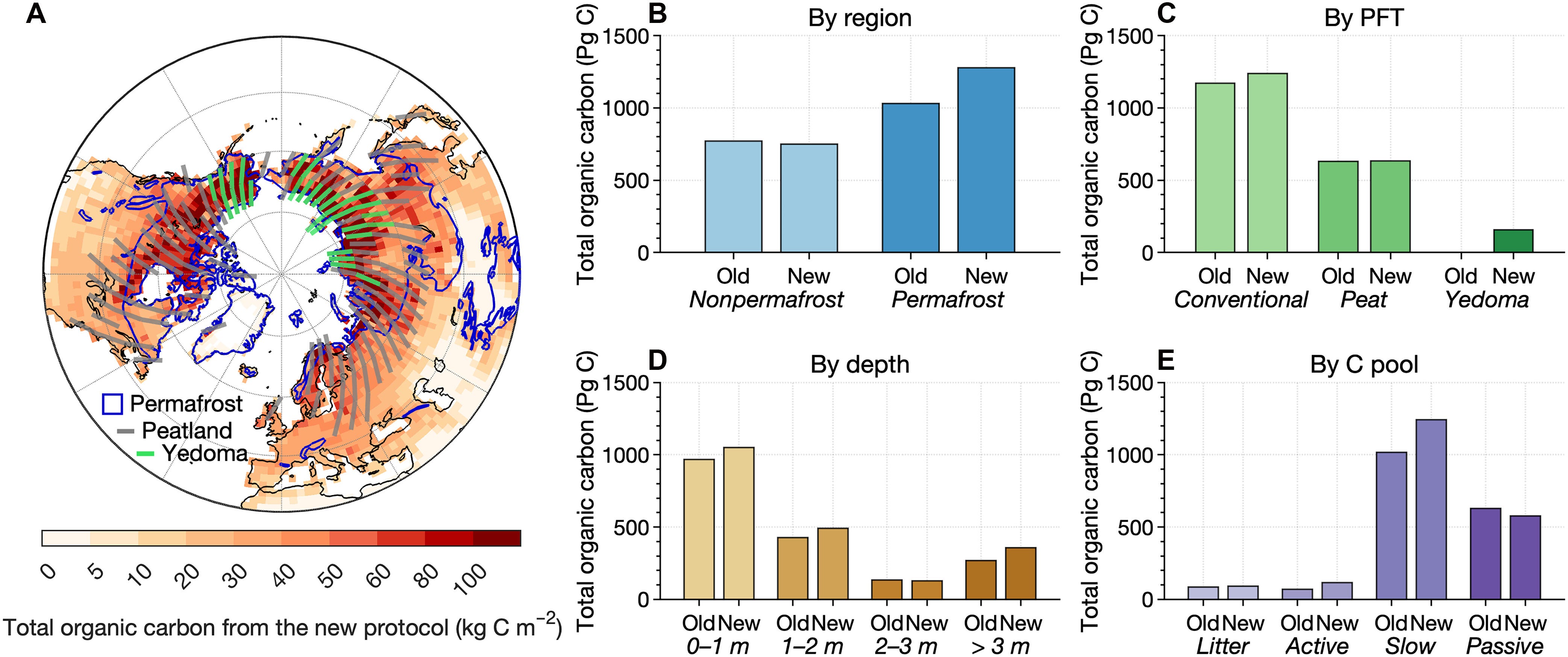
Net release of CO2 from thawing permafrost soil carbon predicted to occur earlier in this century
Authors: Yi Xi, Philippe Ciais, Dan Zhu, Chunjing Qiu, et al.
Synopsis: Incorporating deep permafrost carbon into an Earth system model, this study finds that thawing soils could release substantially more CO₂ than previously projected. Accounting for deep carbon pools reduces estimated carbon uptake and, under high-emissions scenarios, shifts northern soils from a carbon sink to a carbon source during the 21st century, underscoring the importance of representing deep permafrost carbon in future climate models.
Rock weathering can counteract river CO2 emissions induced by permafrost thaw
Authors: Liwei Zhang, Aaron Bufe, Joshua F. Dean, et al.
Synopsis: Investigating rivers across the Qinghai–Tibet Plateau, this study examines how permafrost thaw influences the balance between CO₂ emissions and carbon uptake from rock weathering. The results show that as permafrost declines, river CO₂ emissions decrease while weathering-driven carbon sequestration increases, with chemical weathering potentially offsetting or even exceeding river CO₂ emissions in heavily thawed regions.:::
Fungi enhance microbial carbon retention in high Arctic fjord sediment
Authors: Juan Carlos Trejos-Espeleta, James A. Bradley, Ömer K. Coskun, Laura M. Wehrmann, Gonzalo V. Gomez-Saez, William D. Orsi
Synopsis: Revealing a previously overlooked carbon storage mechanism, this study shows that marine fungi in Arctic fjord sediments efficiently assimilate and retain dissolved organic carbon as microbial biomass. The findings identify fungal metabolism as an important contributor to long-term carbon storage in seafloor sediments, highlighting its potential role in Arctic carbon sequestration as these ecosystems undergo rapid climate-driven change.
Measuring what matters for carbon removal
Authors: Sara Nawaz, Madison Stevens, Terre Satterfield, Giulia Belotti
Synopsis: Emphasizing the importance of social science, this paper argues that environmental research and monitoring for CDR should account for values, power dynamics, and knowledge systems—not just technical measurements. Drawing lessons from diverse environmental fields, it proposes a framework to help design more robust, equitable, and socially responsible monitoring and evaluation systems for emerging CDR technologies.
Improved latitudinal carbon budgets from global airborne surveys
Authors: Britton B. Stephens, Yuming Jin, Colm Sweeney, Kathryn McKain, Benjamin Gaubert et al.
Synopsis: Using airborne CO₂ measurements from NASA’s Atmospheric Tomography Mission, this study refines global carbon flux estimates and substantially reduces uncertainties in atmospheric inverse models. The analysis identifies a strong northern extratropical land carbon sink and a small tropical land carbon source, challenging current process-based carbon cycle models and highlighting important gaps in understanding global carbon uptake and emissions.
Less is more: how to capture carbon efficiently – lessons from long-term rock weathering and soil development in natural warm temperate ecosystems - Preprint
Authors: Dimitar Z. Epihov
Synopsis: Investigating natural weathering in basalt- and dacite-derived soils, this study examines how ERW stores and loses carbon through different soil pools. The findings suggest that CO₂ removal potential may be overestimated due to cation retention in soils, while smaller basalt applications could accelerate both inorganic carbon sequestration and soil organic carbon accumulation.
Enhanced marine burial of terrestrial organic carbon through the Palaeocene–Eocene Thermal Maximum
Authors: Gordon N. Inglis, Jordon D. Hemingway, Richard G. Stockey, et al.
Synopsis: Drawing on evidence from the Paleocene–Eocene Thermal Maximum, this study shows that burial of terrestrial organic carbon in marine sediments increased dramatically during a period of rapid global warming. The findings suggest this process acted as an important long-term carbon sink and climate feedback, highlighting a mechanism that is currently missing from many paleoclimate and carbon cycle models.
Agricultural liming is a large carbon sink in the Mississippi River Basin - Preprint
Authors: Tim Jesper Suhrhoff, Christopher Reinhard, Yoshiki Kanzaki, Samuel Shou-En Tsao et al.
Synopsis: Challenging conventional assumptions, this study finds that agricultural liming has functioned as a net carbon sink rather than a CO₂ source in the Mississippi River Basin over the past century. By combining historical data with reactive transport modeling, the authors estimate that most of lime’s carbon removal potential has already been realized, suggesting optimized soil pH management can enhance crop yields, improve soil health, and reduce agricultural greenhouse gas emissions.
Delayed climate benefits and toxicity risks could hinder the sustainable deployment of enhanced weathering - Preprint
Authors: Selene Cobo, Gonzalo Guillen Gosalbez
Synopsis: Reassessing enhanced weathering using empirical data, this study finds that climate benefits may be delayed by about 11 years due to emissions from rock mining, transport, and processing. It also identifies potential long-term toxicological risks from heavy metal releases, particularly zinc from basalt, suggesting that carbon crediting and large-scale deployment should await stronger evidence and prioritize non-agricultural sites until food safety risks are better understood.
Direct Air Capture Technologies: Innovations, Integration, and Pathways to Scale
Authors: Chuhan Fu, Wenkang Deng, Yalou Guo, Zhifu Liu, et al.
Synopsis: Reviewing recent advances in DAC, this paper evaluates the chemistry, engineering, energy use, costs, and environmental impacts of leading carbon capture technologies. It highlights the potential of integrating DAC with renewable energy and industrial waste heat to improve efficiency and scalability, while outlining key technical and economic challenges that must be addressed for widespread deployment.
Microbial-mediated soil organic carbon sequestration under biochar application in Chinese agricultural soils
Authors: Gehao Zhang, Yang Liao, Jianzhao Wu, Kangyu Wang, Yufei Zhang, Zhouping Shangguan, Yan Fang & Lei Deng
Synopsis: Focusing on the role of soil microbes, this study analyzes hundreds of biochar experiments across China to assess long-term soil carbon sequestration. Biochar significantly increased soil organic carbon stocks, but changing microbial communities reduced carbon retention efficiency over time. The findings suggest biochar application strategies should be adapted to maintain microbial conditions that support sustained carbon storage.
Simulating enhanced ocean alkalinity experiments in a high-latitude fjord using nested ROMS simulations coupled with MARBL biogeochemistry - Preprint
Authors: Ulla K. Heede, Matthew C. Long, Alicia Karspeck, et al.
Synopsis: Evaluating the C-Star regional ocean model, this study demonstrates its ability to simulate OAE field trials in an Icelandic fjord. The model accurately reproduces circulation, tracer transport, and OAE-induced chemical changes, showing that seasonal conditions and winds strongly influence CO₂ uptake and alkalinity dispersal. The findings support C-Star as a valuable tool for designing and interpreting future OAE research and field experiments.
Accounting Methods Dictate Carbon Removal Credit Integrity and Outcomes - Preprint
Authors: Corinne Scown, Sarah Nordahl, Evan Sherwin, Caspar Donnison, Kimberley K. Mayfield
Synopsis: Comparing two carbon accounting approaches, this paper examines how life-cycle assessment (LCA) and the net flux framework (NFF) affect the calculated performance and economics of CDR projects. The analysis shows that accounting choices can significantly alter CDR eligibility and revenues, highlighting the need for clear methods that distinguish genuine carbon removal from emissions reductions and offsets.
Scaling Up Carbon Removal: Policy Challenges and Plausible Future Pathways
Authors: Farzana Enam Rasna
Synopsis: Looking ahead to the future of CDR, this paper develops three governance scenarios based on current trends, emerging signals, and policy, technological, and social drivers. Rather than making predictions, it explores possible pathways for global CDR governance, identifying opportunities and risks while emphasizing equity, international cooperation, and the differing needs and capacities of the Global North and Global South.
Global quantification of the eco-hydrological co-benefits of soil carbon sequestration
Authors: Inne Vanderkelen, Marie-Estelle Demory, Sean Swenson, et al.
Synopsis: Assessing the hydrological impacts of soil carbon sequestration, this study finds that increasing soil organic carbon enhances water retention in plant rooting zones, reduces runoff, and alleviates water stress, particularly in arid, sandy croplands. Although the global effects are modest, the results highlight measurable eco-hydrological co-benefits that can improve ecosystem resilience while supporting climate change mitigation.
An ecosystem of carbon dioxide removal reviews – part 2: CO2 removal via blue carbon ecosystems
Authors: Christian Rischer, Ignacio Saldivia Gonzatti, et al.
Synopsis: Synthesizing evidence from more than 2,600 studies, this systematic review evaluates the contribution of blue carbon ecosystems—including mangroves, seagrasses, salt marshes, and macroalgae—to CDR. The authors conclude these ecosystems could make a meaningful contribution to climate mitigation but require improved carbon accounting, stronger policy integration, and incentive frameworks that support both carbon storage and ecosystem co-benefits.
The influence of speed and scale of carbon dioxide removal on overshoot peak temperature and duration - Preprint
Authors: Nina Rynne, Michael Bode, Melanie E Roberts, Ryan F Heneghan
Synopsis: Using a climate-economic model across Shared Socioeconomic Pathways, this study examines how the speed and scale of CDR deployment influence temperature overshoot beyond the 1.5°C target. The results show that rapid deployment is the dominant factor in limiting peak warming and overshoot duration, while slower rollout leads to substantially higher and longer-lasting temperature exceedance.
Pollution or protection? The International Tribunal for the Law of the Sea’s advisory opinion on climate change and its relevance for marine carbon dioxide removal (mCDR)
Authors: Miranda Boettcher, Rakhyun E. Kim
Synopsis: Analyzing the 2024 ITLOS advisory opinion on climate change, this paper explores its implications for governing marine carbon dioxide removal (mCDR). While the ruling clarifies state responsibility for protecting oceans from CO₂ pollution, it leaves ambiguity over whether mCDR should be classified as pollution or protection, creating scope for divergent political interpretations in future ocean governance and climate policy.
Nature-positive carbon dioxide removal (NPCDR): A governance framework for integrating carbon integrity and ecosystem performance in EU climate policy
Authors: Behrouz Gholamahmadi
Synopsis: Introducing the concept of Nature-Positive Carbon Dioxide Removal (NPCDR), this paper proposes a governance framework that jointly evaluates carbon removal performance and ecosystem health. Building on emerging EU policy initiatives, it argues that carbon durability, biodiversity, soil condition, and hydrological function should be treated as integrated metrics, enabling carbon removal strategies that align climate mitigation with broader environmental restoration goals.

WEB POSTS
Are We Too Obsessed With Carbon Accounting? (Heatmap)
OP2B Recommendations on scaling the agricultural transition through CRCF (WBCSD)
Fungi help lock carbon into Arctic fjord sediments (LMU)
VCM: Biochar demand picks up in SE Asia, Corsia indications stable (QC Intel)
Paydirt: Rock Dust, Rice, and a Smallholder’s Reward (Remineralize the Earth)
Experts: Why carbon removal needs a ‘major scale up’ to return warming to 1.5C (Carbon Brief)
Can We Build a New Industry to Remove Carbon From the Air? (WSJ)
Will carbon removal ever be as cheap as solar? (LSE)
Northern permafrost switches from carbon sink to carbon source earlier than thought in models including deep soil carbon (Phys.Org)
Global surveys find carbon uptake in tropics overestimated (Phys.Org)
Climate Impact Partners Appoints Dominique Airey to Lead Client Solutions Across UK, Europe and Global Markets (ESG News)
ERW project under way in Indonesia, but SE Asia struggles (QC Intel)
Kenya calls for stronger global collaboration on Marine Carbon Dioxide Removal at OurOcean Conference side event (Tech Review Africa)
Swiss team turns cheese, tofu waste into beads that capture CO₂ (Chosun Biz)
Big Tech Lobbying Watered Down SBTi’s Corporate Climate Standard, Critics Say (The Energy Mix)
A coalition of environmental NGOs urged the EU to review Bio-CCS and biochar methodologies under the CRCF
Should CDR methodologies be modular? (Rainbow)
What SBTi 2.0 really means for carbon credit demand (Isometric)
ISO 14060 Draft, SBTi Corporate Net Zero Standard V2, and CDR Demand (CDR.fyi)
Japanese shipper waiting on IMO framework before scaling up CDR purchasing strategy (Carbon Pulse)
Elevating Carbon Management: A Policy Decision-Making Framework and Rubric for the 21st Century (Kleinman Center for Energy Policy)
Stack, Don’t Substitute: How Carbon Removal and SAF Can Reach Net-Zero Together (Canadian Removal Roundup)
Long live CDR?! (Everything and the Carbon Sink)
The new SBTi net-zero standard just rewrote the rules on carbon removal (Critically Speaking)
The Carbon NFix (One Percent Brighter)
REPORTS
Scaling Technology-based Carbon Dioxide Removal - A US Federal Policy Roadmap (Carbon180)
Carbon Offtake Guide - Managing Delivery Risk in Long-term Carbon Offtake Agreements for Nature-Based Removals (Symbiosis Coalition and CrossBoundary)
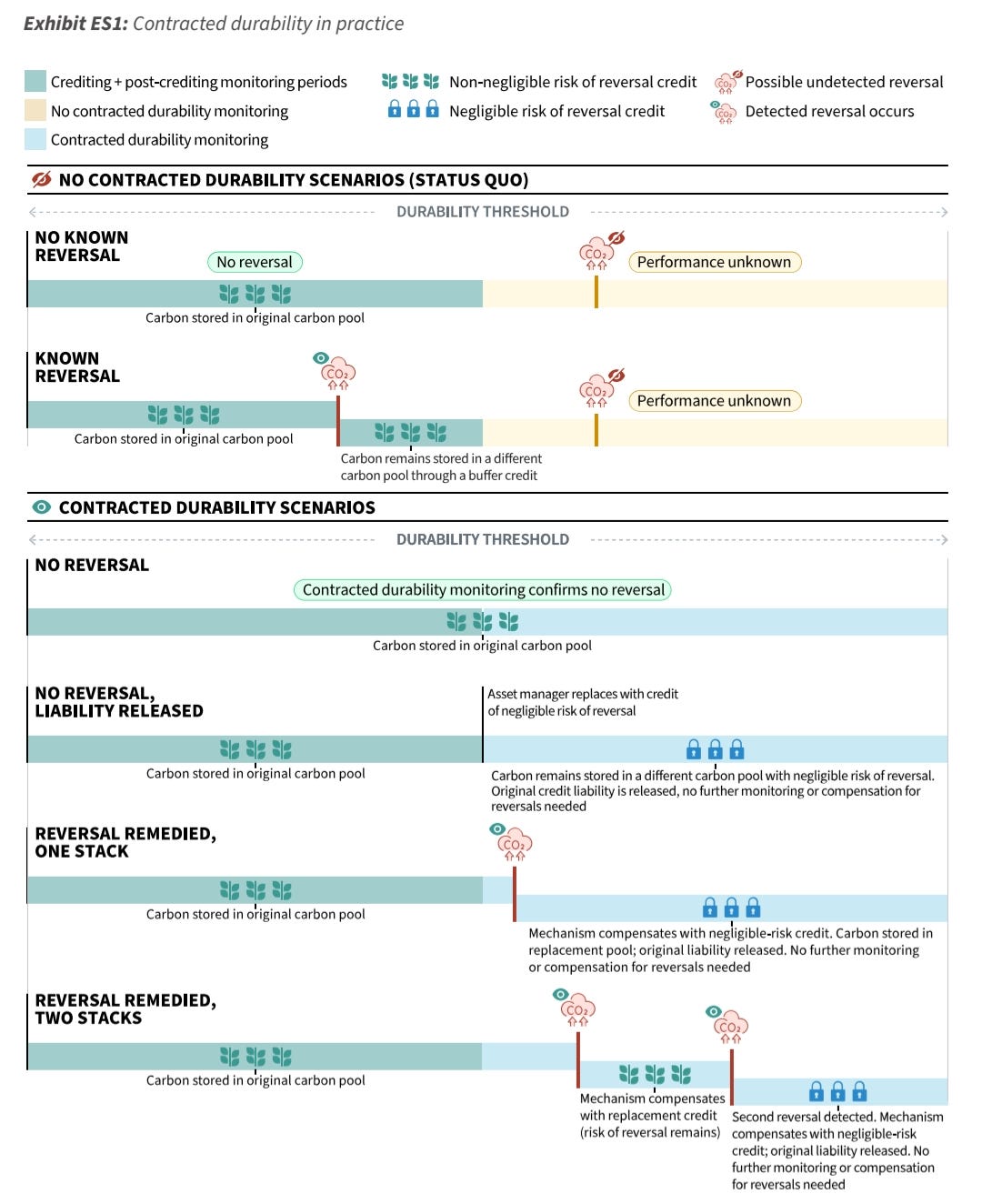
Contracted Durability - A Framework for Performance-Based Carbon Removal (American Forest Foundation, Beyond Alliance, and RMI)
UPCOMING EVENTS
June 2026
CDR2030: The Action Agenda for Growing Carbon Removal by Chris Neidl & Matt Isaacs | 23 June 2026 | London, United Kingdom
Carbon Removal Policy Briefing Lunch — London Climate Action Week by CUR8 Events | 23 June 2026 | London, United Kingdom
From Farmland to Carbon Markets: Evaluating Enhanced Rock Weathering by Tess Seminar | 23 June 2026 | Smithfield & Online
Scaling CDR Summit by Isometric | 23 June 2026 | London, England
Clause & Effect: Making Carbon Removal Purchasing Agreements Work by Beatriz Beccari Barreto, Elena & Glenn Morley | 23 June 2026 | Invited Kingdom
(NEW) De-risking Carbon Removal: How Insurance can Unlock Capital for ERW & other Prominent CDR pathways - London Climate Action Week 2026 by InPlanet & CFC | 24 June 2026 | London, UK
(NEW) Tencent CarbonX 2.0 Winners Announcement | 24 June 2026 | London, United Kingdom
CDR in the Global South - Real Stories from Real Entrepreneurs by Michael Weber & 3 others | 24 June 2026 | London, United Kingdom
London Climate Action Week CDR Social by The Carbon Removal Show | 24 June 2026 | United Kingdom
Who Holds the Risk in Carbon Removal? Rethinking Durability and Liability by American Forest Foundation | 24 June 2026 | San Francisco
Carbon dioxide removal: the latest trends and the UK’s edge by University of Oxford at London Climate Action Week 2026 | 24 June 2026 | United Kingdom
Building the CDR market of tomorrow by AlliedOffsets and LSE | 24 June 2026 | London, UK
NextGen x Frontier - Building the CDR Market Together, The Role of Buyers Clubs by Michael Weber, Aika Kazykhanova & Hannah Bebbington | 24 June 2026 | London, United Kingdom
Carbon Buyers Breakfast at the National Gallery: How CSOs Can Position Carbon Removal as Strategic Value - London Climate Action Week 2026 by InPlanet, Carboneers & ClimeFi | 25 June 2026 | United Kingdom
Symposium on Biomass-Based Carbon Removal by NET-Fuels | 25 June 2026 | Emilia-Romagna
CDR Agenda at COP31: Priorities, Strategy and Expectations | 26 June 2026 | Online
(NEW) Carbon Capture & Storage Association EU Conference 2026 | 30 June 2026 | Brussels
July 2026
Domestic implementation of international legal requirements for mCDR at Columbia University | 02 July 2026 | Online
23rd International Conference on Carbon Dioxide Utilization | 6-10 July 2026 | St.Louis, Missouri
(NEW) The State of Biochar in 2025 by International Biochar Initiative | 08 July 2026 | Online
Fourth Annual Enhanced Rock Weathering Conference by University of Guelph | 08-10 July 2026 | Guelph, Ontario, Canada
Building the Silicon Valley of Carbon in BC by Centre for Climate and Business Solutions | 16 July 2026 | Vancouver, Canada
Nordic Climate Finance Summit | 3-4 September 2026 | Oslo, Norway
Carbon Removal Policy Summit by Carbon Gap | 16 September 2026 | Brussels
Carbon Unbound Europe 2026 | 20-21 October 2026 | London, United Kingdom
2026 North American Biochar Conference - Setting the Standard for Biochar by American Biochar Institute | November 16-18, 2026 | New Orleans, Louisiana
Massachusetts Carbon Dioxide Removal Study Workshop for the Executive Branch by RMI | 17 November 2026 | Online
Ocean Visions 2027 Summit | 02-04 March 2027 | Hilton Cartagena
We have curated a “Carbon Removal Events Calendar.” Explore and stay informed about upcoming events, conferences, and webinars on Carbon Dioxide Removal technology. Sync specific events / all events to your default calendar to ensure you never miss out on important CDR updates.
Add our Carbon Removal Events Calendar to your default calendar in 2 ways:
Head to this link: https://teamup.com/kshqbfhrqkw36sxymd
Sync specific event: Click the event → menu (≡) → Share → choose your calendar → Save.
Or sync all events: Menu (≡) → Preferences → iCalendar Feeds → Copy URL → Add to your calendar settings → Subscribe.

JOB OPPORTUNITIES
Research Associate at Carbon Removal Standards Initiative | Remote
“CRSI is a nonprofit that uses science and policy to unlock carbon removal opportunities in every sector of society.”
PhD Project: Development and demonstration of a laboratory-scale next generation multifunctional reactor for biochar production and bioenergy with carbon capture and storage (BECCS) technology at Aston University | Birmingham
“This project aims to develop and demonstrate a laboratory-scale reactor that can function as a biochar/bio-syngas generator and a bioenergy with carbon capture and storage (BECCS) reactor.”
Senior Buyer at Paebbl | Rotterdam, the Netherlands
“Paebbl is an industrial resilience company turning captured CO₂ into carbon-storing building materials.”
Senior Program Director, mCDR at Ocean Visions | United States (Remote)
“Ocean Visions is a nonprofit conservation organization pursuing bold solutions to counter and reverse climate impacts on ocean health.”
Applied Materials & Industrialisation Lead at A Healthier Earth | United Kingdom
“A Healthier Earth is a climate-tech catalyst delivering profitable, planet-positive projects at speed and scale.”
Enterprise Account Executive, APAC at Patch | Sydney
“The way the world accounts for, trades, and acts on environmental impact is being rebuilt from the ground up — and Patch is the platform scaling unified climate action at the center of it.”
R&D Engineering Internship at Arca | Vancouver, British Columbia
“At Arca, they pull carbon dioxide from the air and store it permanently as rock.”
Commercial Manager - Agriculture at Black Bull Biochar | Manchester
“Black Bull Biochar (BBB) is a growing UK company scaling the use of biochar, a carbon-rich material that improves soil health, livestock and crop resilience, all whilst removing carbon from the atmosphere.”
Data Centre Consultant at Isometric | Remote
“Isometric is the AI-native certifier of climate solutions. They combine scientific rigor with best-in-class technology to unlock the capital and trust needed to reverse climate change.”
Operational Infrastructure Project Manager at Pure DC | London, United Kingdom
“The Operational Infrastructure Project Manager is responsible for the delivery and budget ownership of customer technical fit-out and internal operational projects across Pure DC’s global data centre portfolio. The role ensures all projects are planned and executed safely, efficiently, and to the highest technical and quality standards.”
Looking for your dream job in CDR? There are 560 jobs available *right now*: check them all out at:

PODCASTS
Anthropic and the Future of the Buzzy Carbon Removal Buyer’s Club | Shift Key with Robinson Meyer
“One of the most interesting projects in carbon removal is doubling down on the industry. Frontier — a coalition of tech, finance, and fashion firms that buy carbon removal credits to support the crucial technology — has secured another $915 million to power its next round of buying. The artificial intelligence giant Anthropic has also joined the coalition alongside its existing members, including Stripe, Google, JPMorganChase, and others.
On this episode of Shift Key, Rob is joined by Hannah Bebbington Valori, who leads Frontier. They discuss the health of the carbon removal industry after a tough few years, how Frontier is changing its buying strategy for its newest round, and why Anthropic entered the coalition.”
Green-Hushing, Safe Harbors, and Who Actually Owns a Carbon Credit - with Dr Ruth Dagan | The CDR Policy Scoop
“In this episode of The CDR Policy Scoop, Sebastian Manhart sits down with Dr. Ruth Dagan, Senior Partner and Head of Environment & Climate Change at Herzog Law, and Co-Chair of the IETA Legal Working Group, to cover two legal challenges that are quietly suppressing corporate demand for carbon credits.
The first is litigation risk. Since 2022, climate washing claims have increased by seventy percent globally, with around 160 cases on the books and fifty-four relating specifically to carbon credit offsets. Apple’s carbon neutral Watch campaign was lost in Germany and only tentatively won in the US. The upshot is that many companies are choosing to say nothing about their climate action at all. Ruth calls this green-hushing, and argues it is actively draining demand from the voluntary carbon market.
The conversation covers the two regulatory responses now taking shape: the EU Empowering Consumers Directive, coming into force in September, which blacklists product-level carbon neutrality claims outright, and California’s AB 1911, which proposes the opposite, a safe harbor that would actively protect companies using high-integrity credits. Ruth outlines the work being led by IETA and the Coalition to Grow Carbon Markets, now backed by eleven governments.
The second challenge is more fundamental: most carbon credit registries, including PACM, include explicit disclaimers that they make no legal statement about who actually owns the credits in an account. Ruth explains how this came to be, what it means for institutional investment, and how the Unidroit project, due to conclude in early 2027, offers a route to resolution.”
Inside the ISO Net Zero Standard - with Delia Meth-Cohn | The CDR Policy Scoop
“In this episode of The CDR Policy Scoop, Sebastian Manhart sits down with Delia Meth-Cohn, Co-founder of Rethinking Removals, who has been part of the ISO Net Zero Aligned Organization Standard working group from its very first meeting, two years ago.
The conversation opens on why Delia got involved, recruited by the British Standards Institute to make sure removals expertise was in the room from the start. She explains what makes ISO structurally different from SBTi: where SBTi is a voluntary framework for leading, self-selecting companies, ISO is built to be globally applicable, rooted in national standards bodies and the WTO framework, and designed to accommodate countries with different net zero end dates, from Europe’s 2050 to China’s 2060 and Saudi Arabia’s 2070.
The discussion gets to the heart of what the standard actually does on removals: it makes the implicit removals target in net zero frameworks explicit. Companies setting a long-term reduction target must treat whatever remains as their “anticipated residual emissions”, and that figure becomes a removal target they are required to plan toward, with a validated first milestone within five years. Delia is clear that flexibility is intentional: the strategy can involve a portfolio of credits, removals within operations, or value chain approaches, so long as the trajectory is defensible and verified.
Sebastian pushes on the question of ambition and comparability: can two companies with very different removal strategies both receive the same ISO certification? Delia acknowledges the tension and closes on a call to action: the standard is currently in public consultation, comments feed through national standards bodies into the final draft, and this is the CDR community’s real window to push back on anything that falls short. The final standard is expected by mid-2027.”
When will insetting work for carbon dioxide removal?—w/ Tom Mills, Stripe Climate Fellow (former) | Reversing Climate Change
“Everyone knows about offsetting. But what about insetting? Surely, that’s easier. If only we could define it...
In this episode of Reversing Climate Change, host Ross Kenyon sits down with Tom Mills to dig into the physical reality of carbon dioxide removal (CDR) and its intersection with heavy industry, mining, and global agricultural supply chains.
Drawing from his experience working in mining governance across Africa and South Asia, Tom shares how the physical, logistical, and geopolitical challenges of heavy industry perfectly parallel the hurdles facing the scaling of CDR today. The conversation explores Tom’s journey into carbon removal while living in India, where he realized how the region’s unique geology and agricultural needs make it an ideal landscape for scalable climate solutions like biochar and enhanced rock weathering (ERW).”
Why Forest Cover Tells the Wrong Story: Measuring Carbon from Space — Marco Albani | This Week in Carbon
“In this episode of This Week in Carbon, hosts Edward Smith and Rene Velasquez sit down with Marco Albani, Co-founder and Co-CEO of Chloris Geospatial. Marco has spent his career at the intersection of forestry, climate science, and carbon markets - from building the forestry portion of McKinsey’s Marginal Abatement Cost Curve, to running the Tropical Forest Alliance, to co-founding Chloris with his former forestry classmate Alessandro Baccini, the scientist whose spaceborne LIDAR research underpins what the company does today.This is a conversation about what it actually takes to measure forest carbon at scale, and why the tools the industry has relied on for decades aren’t up to the job.Key topics covered:- Why measuring forest cover is the wrong metric, and why carbon stock is what actually matters for climate outcomes- The fundamental problem with the definition of “forest” and how it creates blind spots in policy and carbon accounting- How Chloris built a carbon time series going back to the year 2000 and the technical limitations that make historical data so hard to reconstruct- Why there is no such thing as “direct measurement” of biomass, and what that means for how we should think about field data vs. remote sensing- The cost reality of satellite data: a $17 million quote for imagery on a project worth $3 million in credits- The three types of customers Chloris serves: carbon market infrastructure (Verra, MSCI, Equitable Earth), project developers under VM47, and corporations tracking Scope 3 supply chain emissions- The Geo AI wave: what foundation models like Google’s Alpha Earth get right, where they fall short, and why accuracy assessment is the missing piece- Who should be building the test beds needed to validate these new tools and why philanthropic capital is the right fit- How better measurement translates into more capital flowing to forests, and what consistent measurement across project, subnational, and national scales means for Article 6- Why humility matters as powerful algorithms replace human judgment in landscape decisionsA technically rich, intellectually honest conversation about the infrastructure the carbon market needs to actually work.”
YOUTUBE VIDEOS
Direct air capture Illuminating and filling the gaps | CanCO2Re Initiative
“Direct air capture (DAC) has received increasing attention as a method to reduce atmospheric CO2 and achieve net-zero commitments. Despite industry momentum and media attention, core questions around the engineering science of DAC remain underexplored.
In this webinar, researchers from the CanCO2Re DAC team pull back the curtain on what the science tells us about how DAC works, where the knowledge gaps are, and why forming an informed opinion on DAC requires access to data that, in many cases, doesn’t yet exist. They’ll also offer a glimpse into the foundational research underway in Canada to fill these gaps.”
Capitol Hill Ocean Week: mCDR Explained: Potential Solutions, Risks, and Community Considerations | Carbon to Sea
“Marine Carbon Dioxide Removal Explained: Potential Ocean-Climate Solutions, Risks, and Community Considerations” panel conversation held on June 3, 2026 during Capitol Hill Ocean Week in Washington, DC. The panel includes Ruth Driscoll-Lovejoy (Ocean Visions), Nasya Dodson (Carbon180), and Mara Karageozian (Consortium for Science, Policy & Outcomes at ASU).
Capitol Hill Ocean Week: mCDR and U.S. Policy: What Decision-Makers Need to Know | Carbon to Sea
“Marine Carbon Dioxide Removal and U.S. Policy: What Decision-Makers Need to Know” panel conversation held on June 3, 2026 during Capitol Hill Ocean Week in Washington, DC. The panel includes Priyanka Hooghan (Carbon to Sea), Jennifer Rennicks (World Resources Institute), Ruth Driscoll-Lovejoy (Ocean Visions), and Stacy Aguilera-Peterson (Carbon180).”
Designing Our Carbon Future w Bill Hilgendorf, furniture design to biochar in advanced materials | Biochar Today
“What happens when an industrial designer falls down the biochar rabbit hole?
If you want to understand where the biochar industry is headed next, this episode is worth your time!
Bill Hilgendorf operates at the intersection of biochar production, education, and advanced carbon materials. In this episode of The Biochar Show, we explore his compelling journey from industrial furniture design to building New York Carbon, supporting biochar adoption through White Feather Farm, and developing next-generation biochar products for the built environment.
The conversation covers biochar economics, production systems, carbon markets, standards development, on-site biochar production, and the growing role of biocarbon in insulation, filtration, stormwater management, and sustainable construction.”
How I Would Build a Corporate Carbon Credit Strategy From Scratch Today | Senken
“I’ve watched dozens of large European corporates get carbon credit strategy wrong. Companies spending 7 figures on credits that turned out to be useless for SBTi submission because nobody checked the methodology against the rules first.
The pattern is always the same: people start shopping before they have done the foundational work.
In this video I walk through the exact 14-step framework I would use today to build a corporate carbon credit strategy from scratch, across 5 phases.”
The Carbon Removal Potential of Rubberwood | Beston_ReGreen
“The rubber industry has a mature latex and timber value chain, yet it has long overlooked the potential of processing residues. A large volume of rubberwood waste remains underutilized and fails to achieve a circular resource loop.
With voluntary carbon markets increasingly demanding durable carbon removal, converting waste into biochar has emerged as a high-quality solution for sustainable development within the industry chain.
Compared to other biomass sources, rubberwood biochar projects perfectly avoid two major challenges:
Compliance: Under EU regulations, natural rubber is classified as an agricultural product, and rubber plantations are considered agricultural land. Tree renewal falls under sustainable management, posing no risk of deforestation, thereby easily passing international carbon audits.
Supply stability: Rubber trees have a 25–30-year growth cycle, and routine replanting enables precise forecasting of raw material supply over the next decade. The dual value of rubber trees—latex and timber—ensures that raw material supply is not vulnerable to fluctuations in a single market.
This technology converts easily perishable carbon into solid carbon that can be sequestered for centuries, achieving durable carbon removal while improving soil quality and enhancing plantation productivity.
Amid the surge in demand for high-quality carbon credits, rubberwood biochar, with its compliance, stability, and scalability, is emerging as a highly promising project in the carbon market.”
Financing Models and the Evolution of CDR Credits in Carbon Markets | Cdr Türkiye
“The second session of CDR Stage towards COP31 focused on the mechanics of carbon removal credits and market practices. The webinar was co-hosted by Pinar Oncel and Göker Avcı.
Stacy Kauk, P.Eng. (Chief Science Officer at Isometric, ex-Shopify Head of Sustainability) shared her experience building the first corporate CDR portfolios and how science-based standards act as the “regulatory authority” in a market without a globally accepted government standards. The discussion connected the dots between credit quality, standards and certification, and what these unlock: buyer confidence, smoother capital flow, and a market that can mature.”
Following captured CO₂ to the North Sea | Living Planet | DW Podcasts
“What happens after carbon is captured? In this special collaboration with the How We Survive podcast, Living Planet follows CO₂ from a cement factory to its final resting place more than a mile beneath the seabed. We investigate the promise, pitfalls and politics of a technology that could help tackle climate change -- or prolong the fossil fuel era.”
2026: Carbon Expert Series: GHG Protocol updates: The Land Sector Removal Standard (LSRS) | Carbon+Alt+Delete
Weekly Carbon Removal Updates from 15 June - 21 June 2026 | Carbon Removal Updates Bulletin
DEADLINES
Wren launched its 2026 RFP, offering up to $500K for ARR, blue carbon, and methane reduction projects | Deadline: 30 June 2026
Isometric launched a consultation on a new model-based enhanced weathering quantification framework | Public consultation ends 08 July 2026
California Energy Commission opened $11M funding for pre-commercial DAC projects | Deadline July 31, 2026
(NEW) Enova launched consultation on NOACCS, Norway’s planned carbon capture and storage auction scheme, including DAC | The deadline for input is 06 August 2026
Call for Proposals: Sweden’s Energy Agency launched a $1B BECCS funding round for CO₂ capture from bioenergy | Deadline: 13 August 2026
Swedish Energy Agency opened 15M SEK funding for negative emissions R&D | Deadline: 31 August 2026
Germany launched €5B Carbon Contracts for Difference program to support CCS and CDR | Tender submission deadline: 07 September 2026
(NEW) ISO has opened its draft ISO 14060 carbon credit procurement rules for consultation until 09 September 2026, proposing durable CDR purchases within five years of setting a net-zero target.
Carbon Management journal calls for CDR papers | Deadline: 13 November 2026
The Ocean Science Equity Initiative announced to offer travel grants for individuals to attend mCDR conferences and meetings | Applications deadline: 15 November 2026
CIEIF announced another round of three grants with award amounts of $75,000 each | Deadline for applications is December 1, 2026
Call for Manuscripts | Research Topic: Forest Carbon Sinks: Fluxes and Storage Capacity | 31 January 2027
Follow us on:
Twitter | Bluesky | LinkedIn | YouTube | Substack | Podcast 1 | Podcast 2